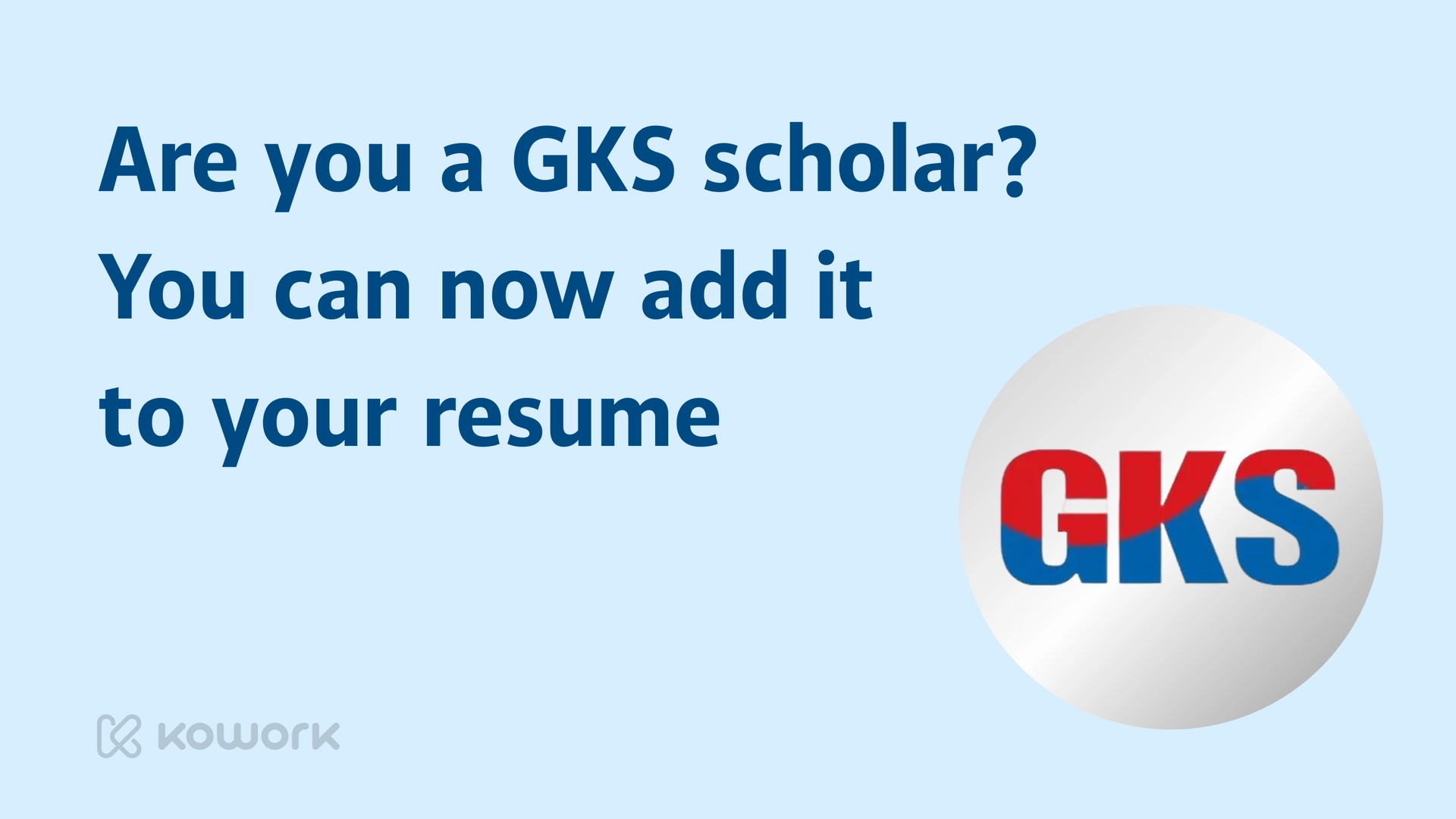
Not sure where your GKS scholarship belongs on your resume?
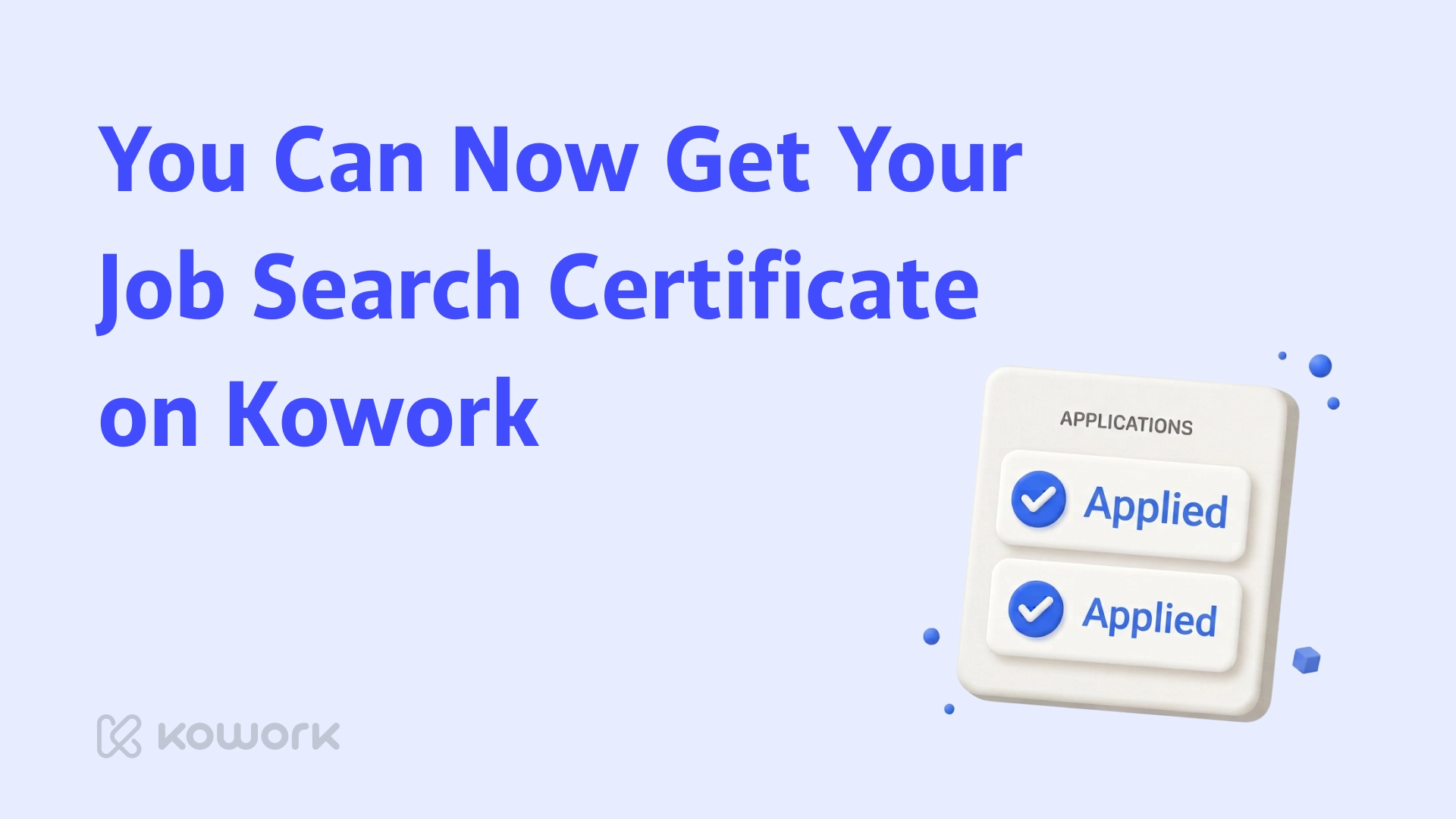
You can now add your GKS scholarship certificate to your Kowork resume as its own item.
Once you add it, a GKS badge appears at the top of your resume, so more than 2,700 Korean companies can see at a glance that you are a GKS scholar.
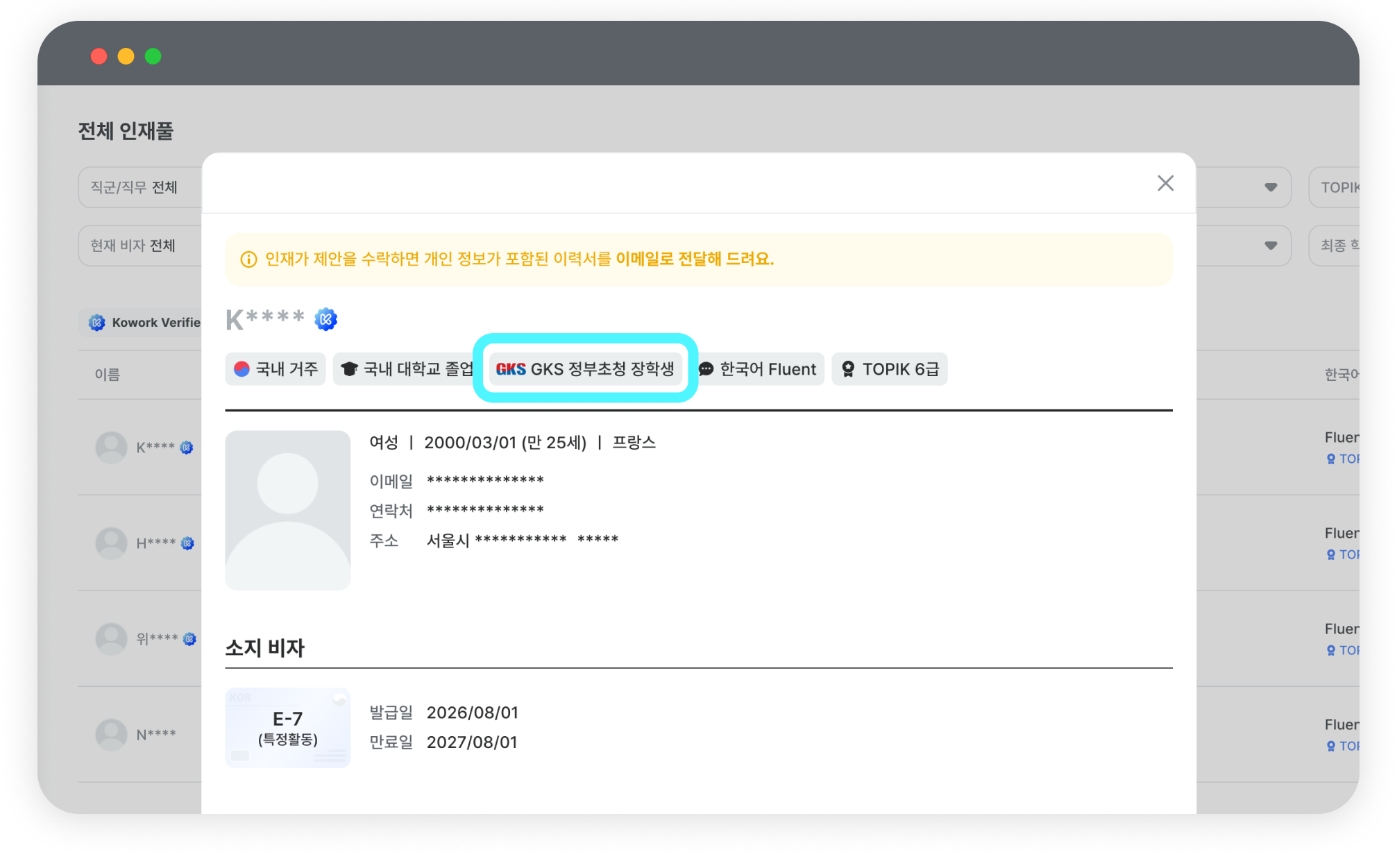
The Kowork resume is built for foreign job seekers: you can also add your visa, Korean language school, TOPIK level, and more.
Not a member yet? Sign up and build a resume that stands out to Korean companies.
Where and how do I add it?
1. Log in or sign up on Kowork, then go to [My Resume]. (Works on desktop, mobile web, and the app.)
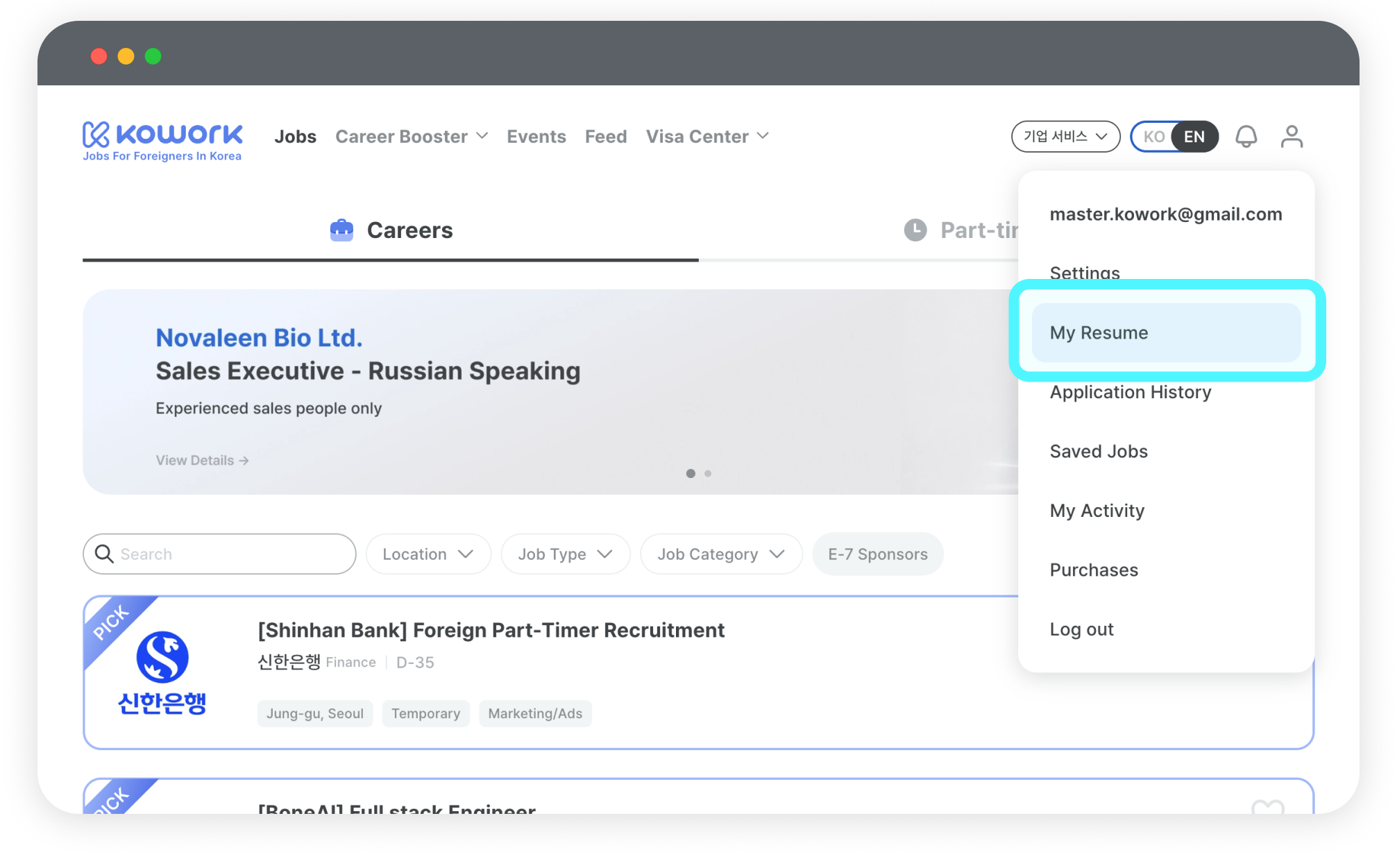
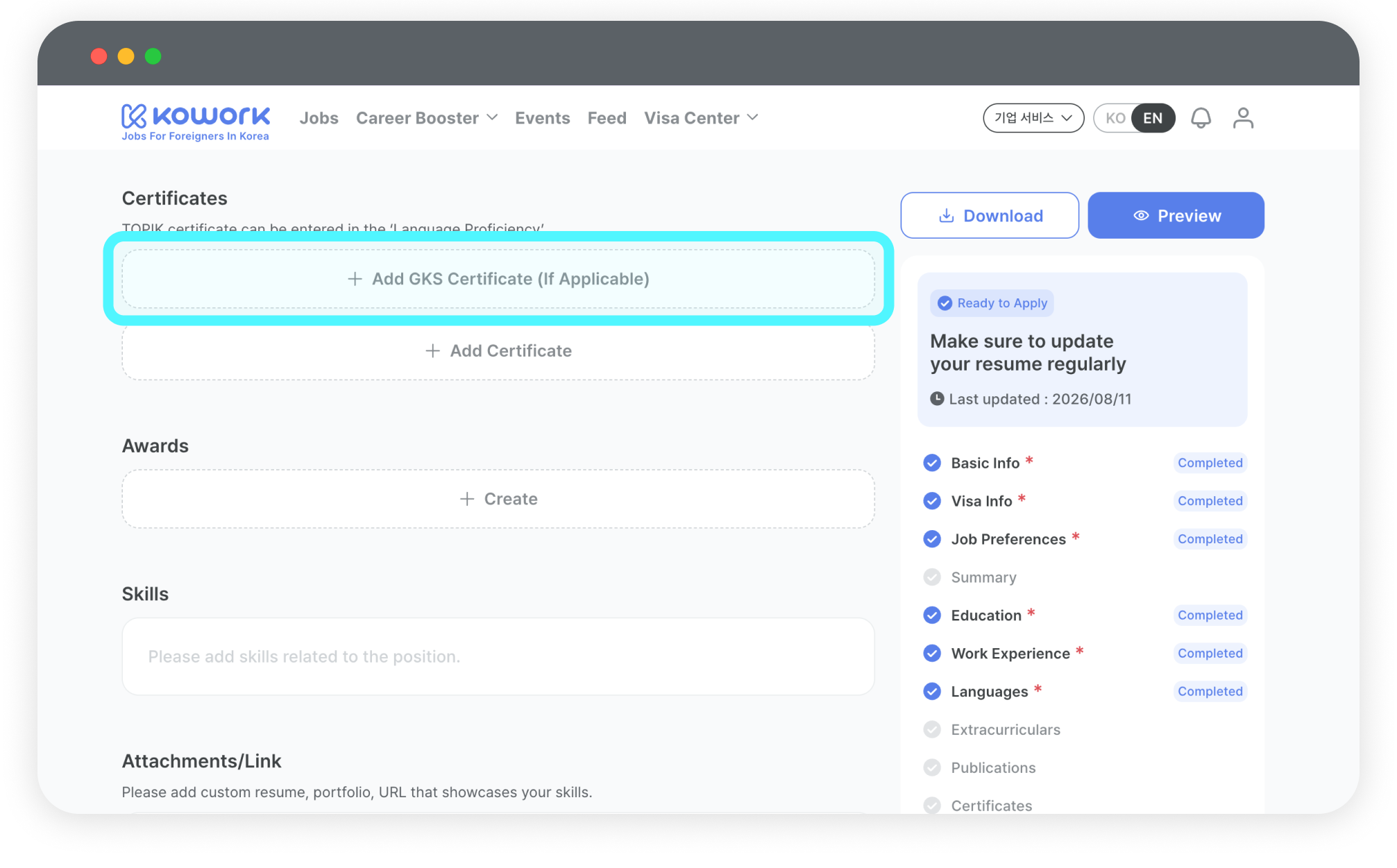
2. In the Certificates section, tap the [Add GKS Certificate] button.
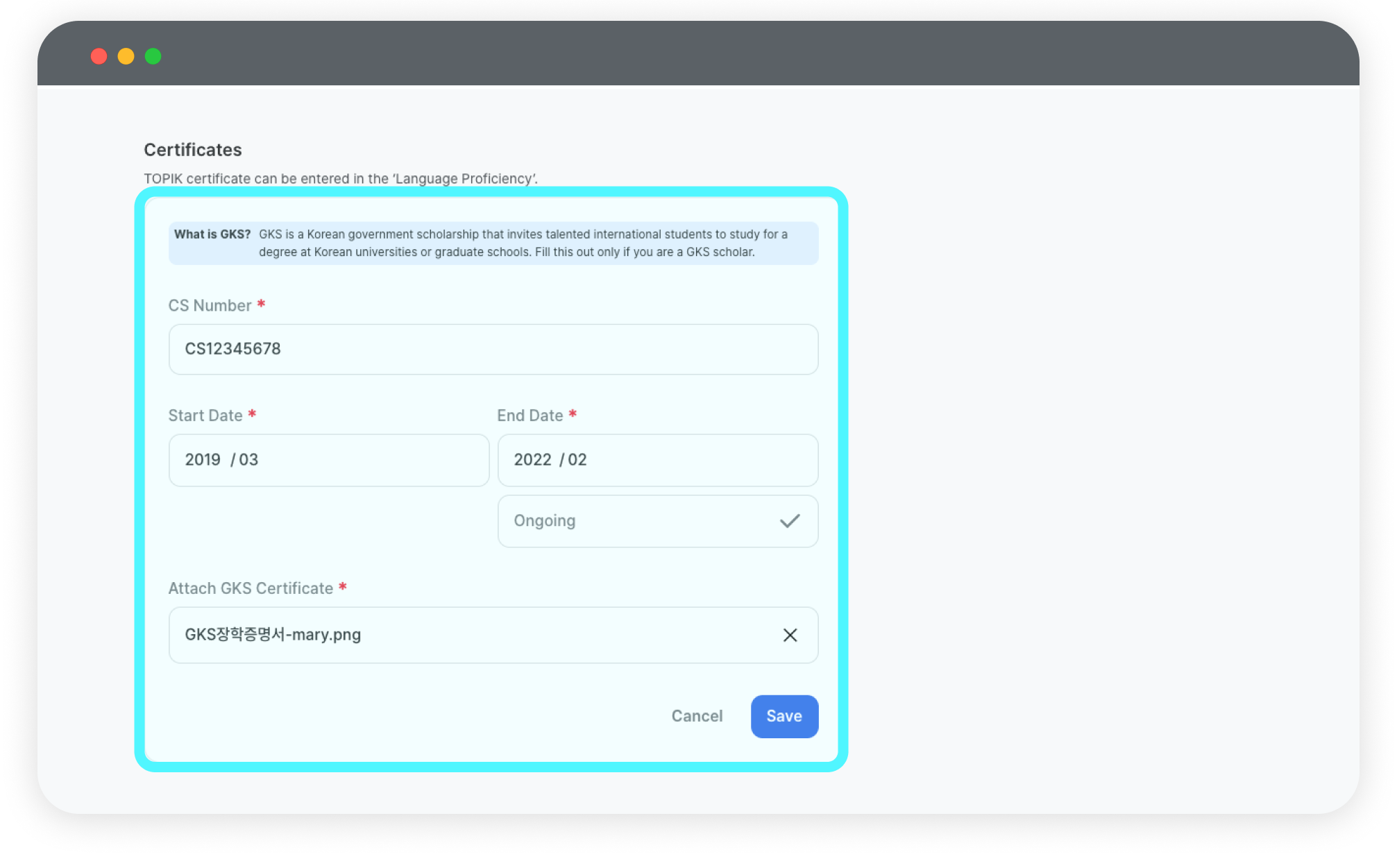
3. Upload your certificate file, fill in the details, and save.
⚠️ Already mentioned GKS somewhere else? Please add it again using the steps above.
GKS written in your introduction or education section is not counted as a GKS record. The badge only appears at the top of your resume when you add it through the [Add GKS Certificate] button.
Nothing new to prepare. One minute makes your resume stronger.
Companies are searching for talent right now. If you have your certificate file, adding it takes just a few taps —
so do it before you write your next application.
[Add GKS Certificate]
Wait — what is GKS?
GKS (Global Korea Scholarship) is a national scholarship program run by the National Institute for International Education (NIIED), under Korea's Ministry of Education.
It started in 1967 and has supported more than 20,000 students from 161 countries. About 2,000 new scholars are selected every year.
Here is what GKS scholars have in common:
Top 20% of their class
Just to apply, students must be in the top 20% of their previous degree program (or have an average of 80% or higher). They then pass several rounds of review by the Korean embassy, NIIED, and the university.
Ready to work in Korean
Scholars complete one year of Korean language training and must reach TOPIK Level 3 or above before starting their degree. Some departments require Level 4 or above. They then complete the full degree in Korea.
At least 3 years living in Korea
Their program — associate, bachelor's, master's, or doctoral — takes 2 to 6 years. By the time they start job hunting, they have already settled into life in Korea.
Sources
- Run by the National Institute for International Education (NIIED) under the Ministry of Education — announcements from Korean diplomatic missions and Korean Education Centers
- Eligibility (nationality, top 20% / average 80% or above, age) and benefits (airfare, tuition, living allowance, settlement allowance, medical insurance, Korean language training) — GKS application guide, Korean Education Center in Seattle; Korean Education Center in France
- Structure of the master's (3 years) and doctoral (4 years) programs, and the language training waiver for TOPIK Level 5 or above — Korean Education Center in Seattle
- TOPIK Level 3 requirement for undergraduate programs, and Level 4 for some departments — Embassy of the Republic of Korea in Ukraine, 2026 GKS-U selection guide