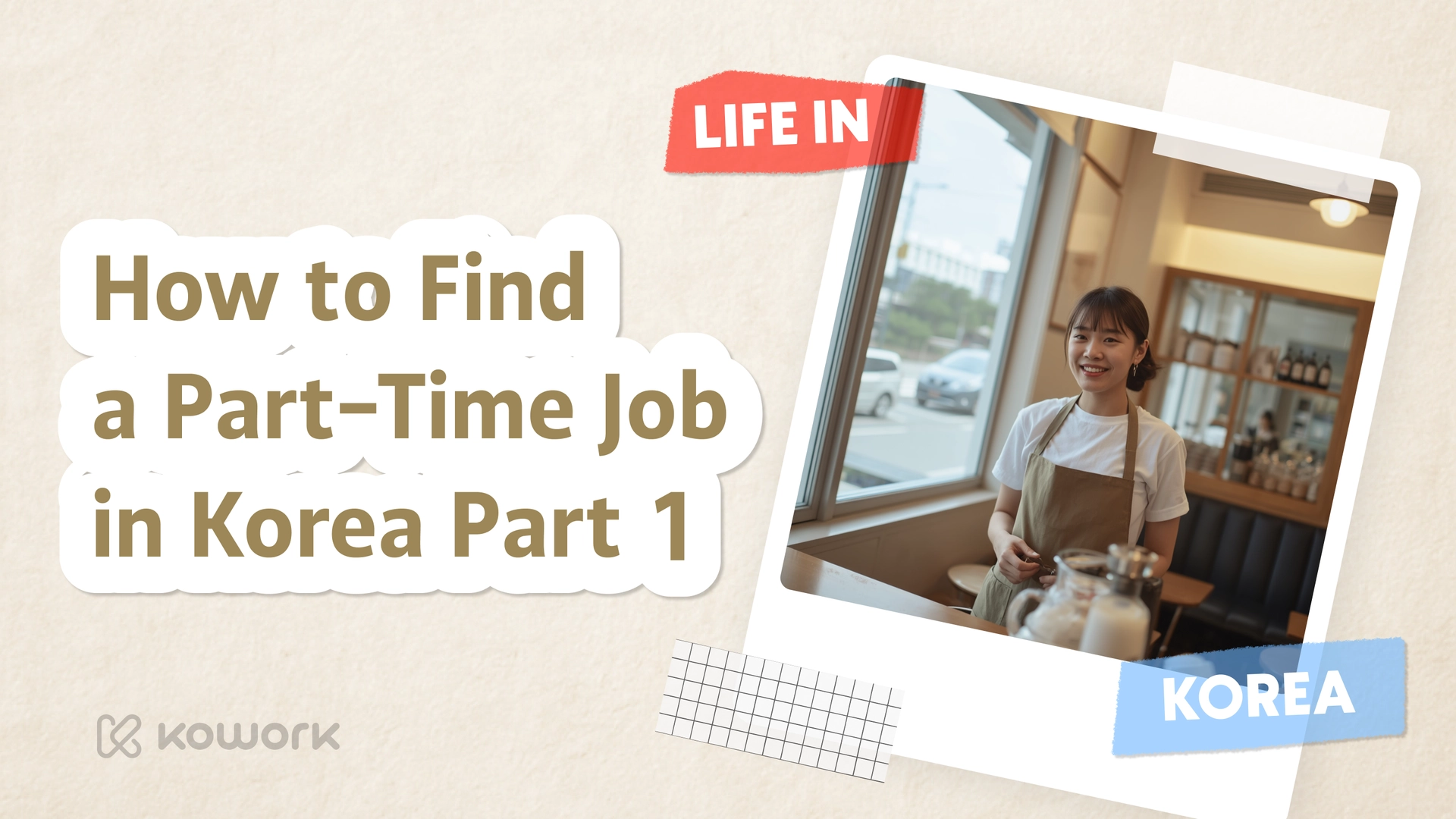
How to Find a Part-Time Job in Korea (Part 1)
Hello, this is KOWORK, a job platform for foreigners in Korea.
If you are living in Korea as a foreigner, you may be thinking about finding a part-time job (아르바이트, or "알바"). Whether it's to cover living expenses, practice your Korean, or get a feel for working life in Korea — part-time work can be a great experience.
But if this is your first time, you may have a lot of questions. Can I even work on my visa? Where do I find job listings? How does the application process work?
In this article, we'll cover everything you need to know to get started.
1. Can foreigners work part-time in Korea?
Yes — but the rules depend on your visa type.
There are currently around 2.83 million foreigners living in Korea, and more and more are joining the workforce each year. However, working without the proper authorization can lead to serious consequences, including visa cancellation or deportation.
Before you start looking for a job, always check your visa conditions first.

2. Where to find part-time job listings
2. Where to find part-time job listings
Looking for part-time jobs in Korea as a foreigner? We recommend starting with KOWORK.
KOWORK is a job platform built specifically for foreigners in Korea. You can filter listings by your visa type, so you only see jobs you are actually eligible to apply for — no guesswork, no wasted time.
💡 Browse part-time job listings that match your visa type right away. → kowork.kr
3. How the application process works
Here is the general flow for applying to part-time jobs in Korea.
Step 1 — Find a listing and contact the employer
After finding a job posting you like, you can apply through the platform or contact the employer directly by phone or text. Many listings in Korea still ask you to call first, so it helps to prepare a short self-introduction in Korean.
Step 2 — Interview and confirm your workplace
Once you pass the interview, your workplace is confirmed. This is the point from which you can move on to signing a contract and applying for your work permit.
Step 3 — Sign your employment contract with the employer
After your workplace is confirmed, sign your employment contract with the employer first. The contract should clearly state your hourly wage, working hours, workplace location, and contract period. Always keep a copy. Without a signed contract, it can be very difficult to resolve disputes about wages or working hours later.

Step 4 — Get confirmation from your school's international student office
If you hold a D-2 or D-4 visa, you must visit your school's international student office before applying for a work permit. A staff member will need to sign your part-time work confirmation letter. Processing times vary by school, so check in advance.
Step 5 — Apply for a part-time work permit via HiKorea (D-2 and D-4 visa holders)
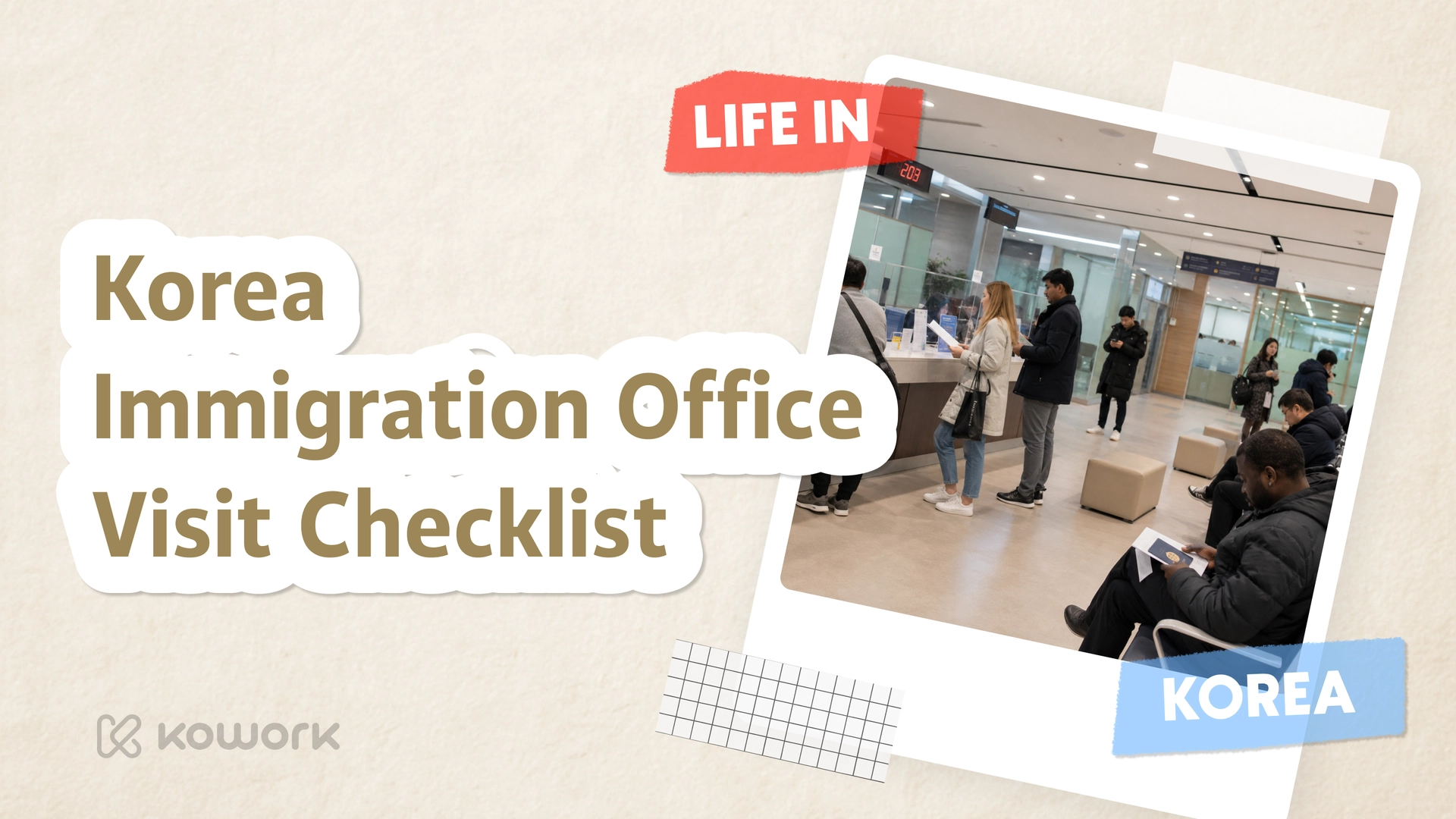
Once your school has signed off, apply for your part-time work permit (시간제 취업 허가) through HiKorea (hikorea.go.kr) online, or visit your local immigration office in person. Working without this permit is considered illegal employment, even if you have a signed contract.
Required documents typically include:
- Integrated application form
- Part-time work confirmation letter (signed by school and employer)
- Academic transcript
- TOPIK score certificate
- Copy of employer's business registration certificate
Step 6 — Start working after permit approval
Once your permit is approved, you are cleared to start work. Do not begin working before the permit is issued — this could be treated as illegal employment.
💡 If Korean is difficult, you can request a multilingual standard labor contract. Always check that the Korean text matches the translated version before signing.
4. What is the minimum wage in 2026?
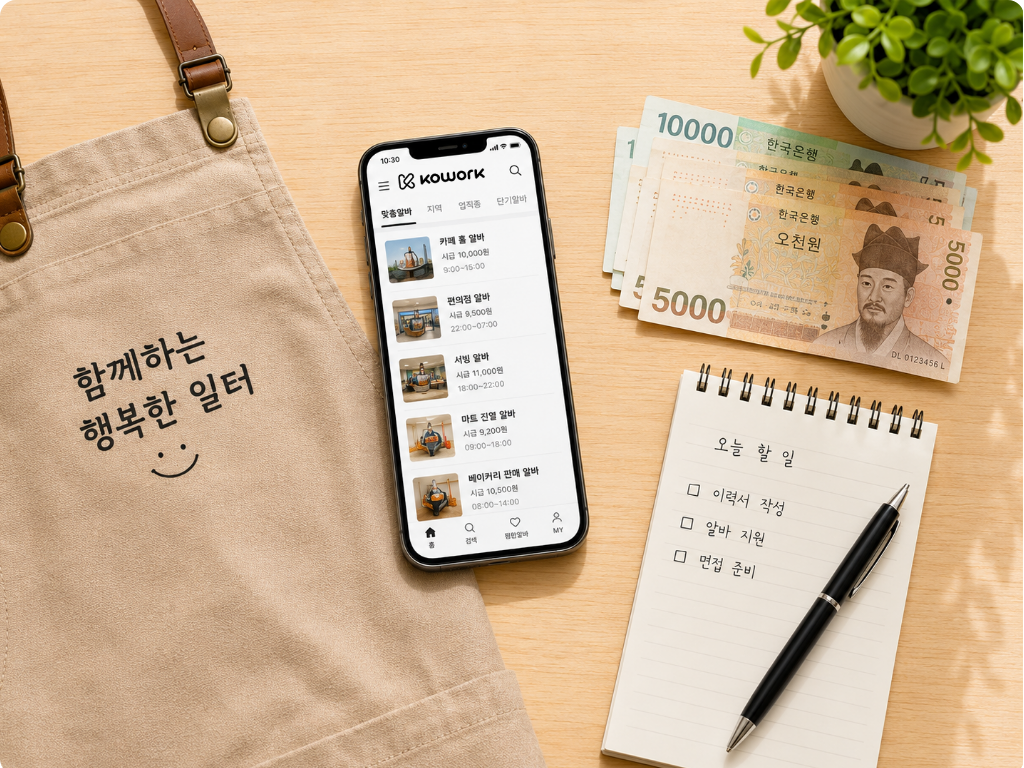
The 2026 minimum wage in Korea is ₩10,320 per hour.
This applies to all workers in Korea, regardless of nationality. If an employer asks you to work for less — even citing reasons like "training period" or "you're a foreigner" — that is a red flag.
Also, if you work 15 hours or more per week and maintain full attendance, you are entitled to a weekly holiday allowance (주휴수당) on top of your regular pay. Always check whether this is included when reviewing a job offer.
Coming up in Part 2 👀
In Part 2, we will cover visa-specific rules in more detail, how to write a resume for Korean employers, and tips for your interview.
Find your next part-time job in Korea on KOWORK.