Hello! This is KOWORK, a foreigner hiring platform in Korea.
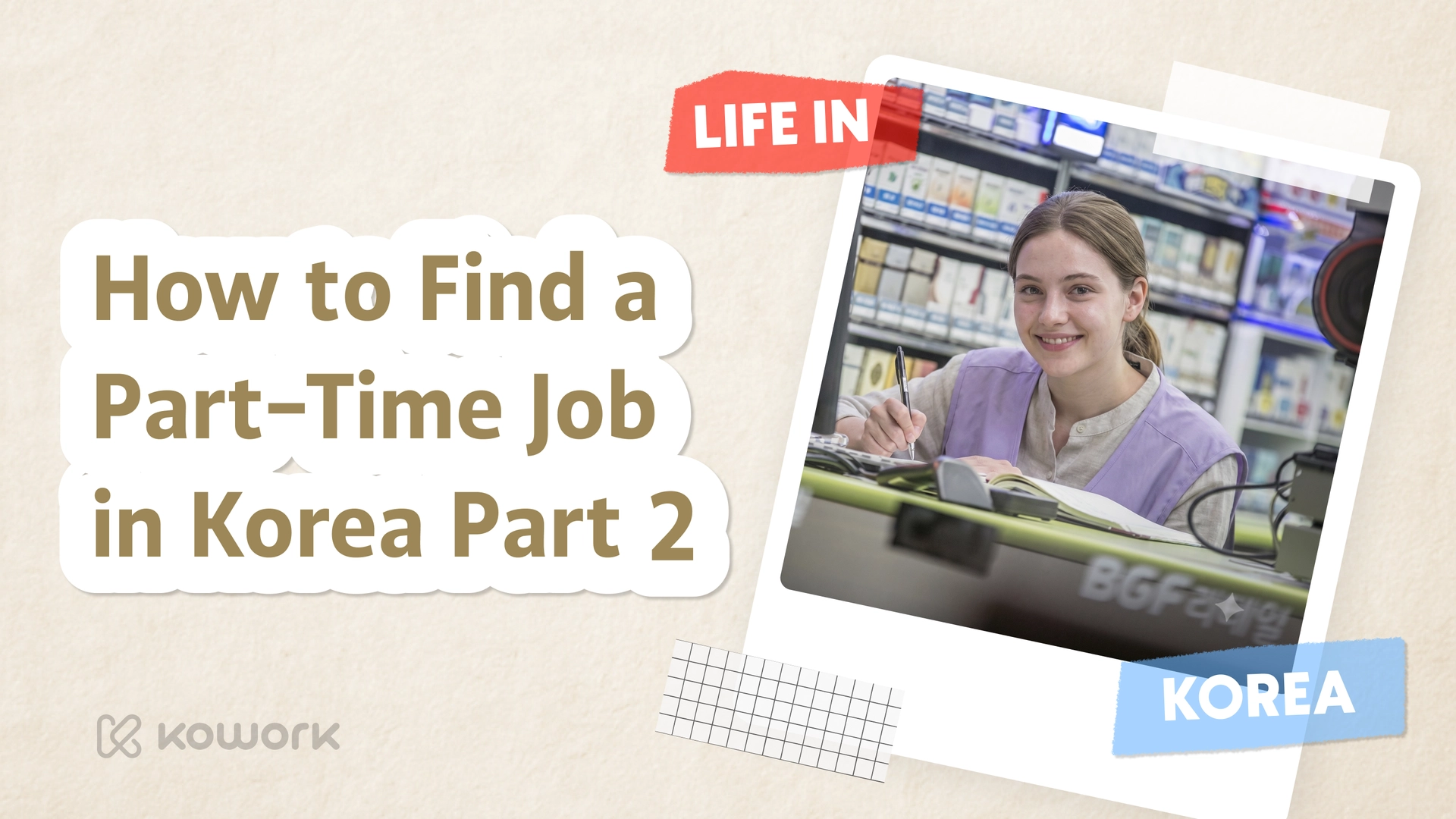
In Part 1, we walked through the basics of part-time work in Korea, the step-by-step permit process, and minimum wage requirements.
In Part 2, we’re diving deeper into the specifics: visa-specific working hour limits, how to craft a Korean-style resume (이력서), and tips to ace your job interview!
1. Visa-Specific Rules & Allowed Working Hours
Not all visas come with the same working permissions. Here is a quick breakdown of the rules for the most common foreigner visas in Korea:
🎓 Student Visas (D-2 & D-4)
If you are studying in Korea, your primary purpose is education, so part-time work (시간제 취업) requires immigration approval.
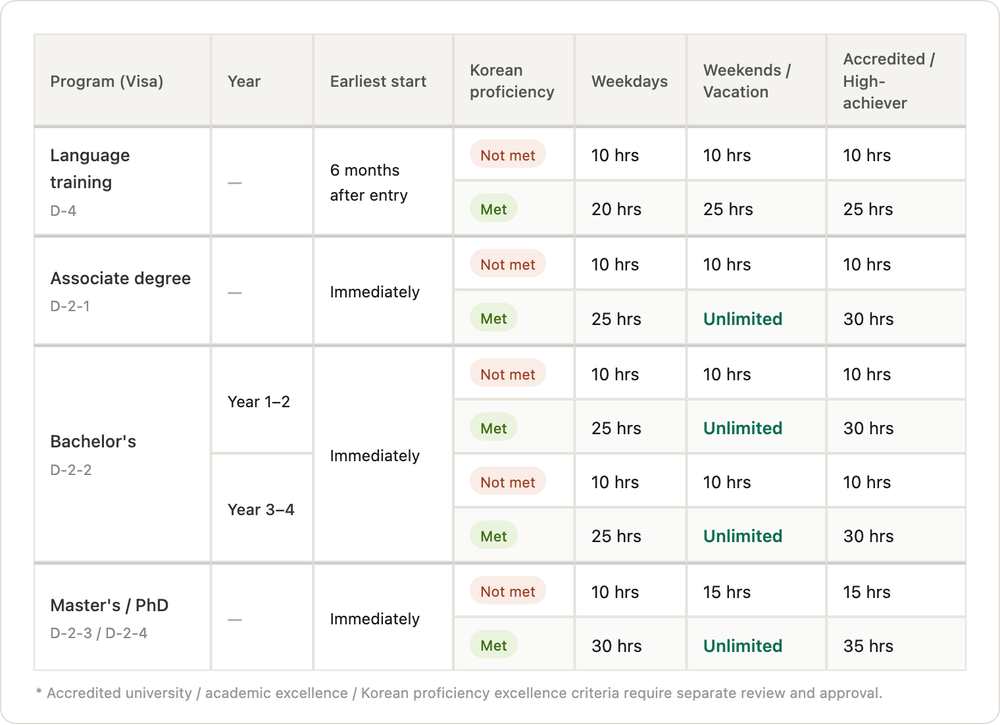
- D-4 (Language Trainee): You can only apply for a work permit after 6 months of study in Korea. Your attendance should generally be over 90% for the enrollment period.
- TOPIK Level 2 or above: Up to 20–25 hours per week.
- Below TOPIK Level 2: Up to 10 hours per week.
- D-2 (Undergraduate): Allowed to work up to 10–25 hours/week during the semester (depending on your year and TOPIK score/language proficiency level). During official semester breaks (summer/winter vacations), there is no hourly limit for students who meet the Korean proficiency requirements.
D-2 (Graduate/Master’s & Ph.D.): Allowed up to 15–30 hours/week during the semester, with no limit during official vacations.
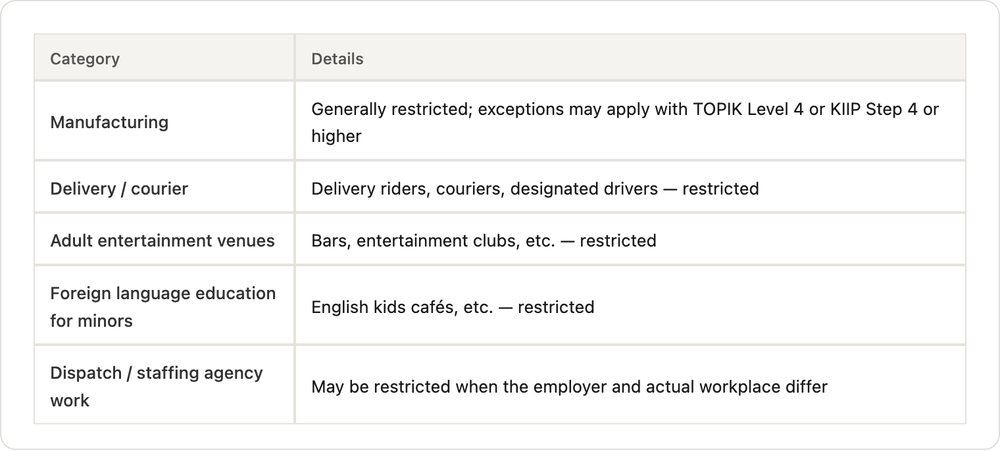
⚠️ Strict Prohibitions for D-2/D-4 Holders:
International students are strictly prohibited from working in certain fields, including construction, manufacturing, delivery services (배달), adult entertainment, and private tutoring/teaching. Violations can result in heavy fines, visa cancellation, or deportation.
💡 Want to know more? Check out our Part-Time Work Permit Guide for International Students.
✈️ Working Holiday Visa (H-1)
- You can work up to 25 hours per week (or up to 1,300 hours per year) depending on specific bilateral agreements. However, Canadian participants are exempt from the 25-hour restriction and may work up to 40 hours per week.
- You do not need a separate immigration permit for most general part-time jobs, but certain professional fields (teaching, law, medicine, entertainment) are restricted.
🏠 Long-Term Residence & Family Visas (F-2, F-4, F-5, F-6)
- F-2 (Resident), F-5 (Permanent Resident), F-6 (Marriage Migrant): You generally have the same employment freedom as Korean citizens without weekly hour limits or separate work permits for part-time jobs.
- F-4 (Overseas Korean): You can work freely in most professional and office roles, but simple manual labor (단순노무, e.g., kitchen dishwasher, construction laborer, or manufacturing worker) is restricted under immigration law.
2. How to Write a Korean-Style Resume (이력서)
When applying for part-time jobs in Korea, submitting a simple, well-structured resume (이력서) in Korean significantly boosts your chances of getting hired.
Essential Components of a Korean Resume:
- Personal Information (인적사항): Name (matching your Alien Registration Card / Residence Card), phone number, email, address, and visa type.
- Profile Photo (사진): Korean employers expect a clean, professional headshot in the top corner of the resume.
- Education (학력사항): List your current university, major, and expected graduation date.
- Work Experience (경력사항): List any previous part-time or full-time jobs, focusing on customer service, teamwork, or relevant roles.
- Language Skills & Certifications (자격증/어학): Highlight your TOPIK score, KIIP level, or English proficiency scores.
💡 Pro Tip: If you apply through KOWORK, you can build a digital foreigner-friendly profile that automatically formats your visa details, language levels, and available working hours for employers!
Want a perfect Korean resume? Check out our AI Resume Review service, or sign up for our 1:1 Resume Coaching Service!
3. Ace Your Interview: Key Phrases & Etiquette
Most part-time job interviews (면접) in Korea are brief (10–15 minutes) and focus on your punctuality, personality, and Korean communication ability.
Common Interview Questions to Prepare For:
- "자기소개 간단히 해주세요." (Please introduce yourself briefly.)
- "한국어는 얼마나 할 수 있나요?" (How fluent is your Korean?)
- "근무 가능한 요일과 시간이 어떻게 되나요?" (What days and hours are you available to work?)
- "얼마나 오래 일할 수 있나요?" (How long do you plan to work here?)
Helpful Phrases to Use During the Interview:
"안녕하세요, [Name]입니다. 잘 부탁드립니다!"
(Hello, I am [Name]. Nice to meet you / Please look favorably upon me!)
"성실하고 시간 약속을 잘 지킵니다."
(I am hardworking and always punctual.)
"손님 응대 경험이 있습니다."
(I have experience in customer service.)
"감사합니다. 열심히 하겠습니다!"
(Thank you. I will do my best!)
💡 Want to know more about how to prepare? Check out our blog post on 7 Tips to Ace Your Job Interview in Korea.
💡 For a full practice run before the real thing, try our Mock Interview Service! or read our tips about possible interview questions
4. Checklist Before Your First Day of Work
Once you pass the interview and get your permit approved, make sure you complete this final checklist:
- [ ] Signed Employment Contract (표준근로계약서) — Keep your copy.
- [ ] HiKorea Part-Time Permit Stamp/Confirmation (for D-2/D-4).
- [ ] Copy of Alien Registration Card (ARC) & Bank Passbook (통장 사본) submitted to your employer for salary transfer.
Ready to Start Your Job Search?
Finding a part-time job as a foreigner in Korea doesn't have to be overwhelming. By keeping your visa status clear, preparing a simple Korean resume, and applying through the right channels, you'll be on your way to earning extra income and building valuable local experience.
💡 Find verified, visa-friendly part-time jobs today on KOWORK!