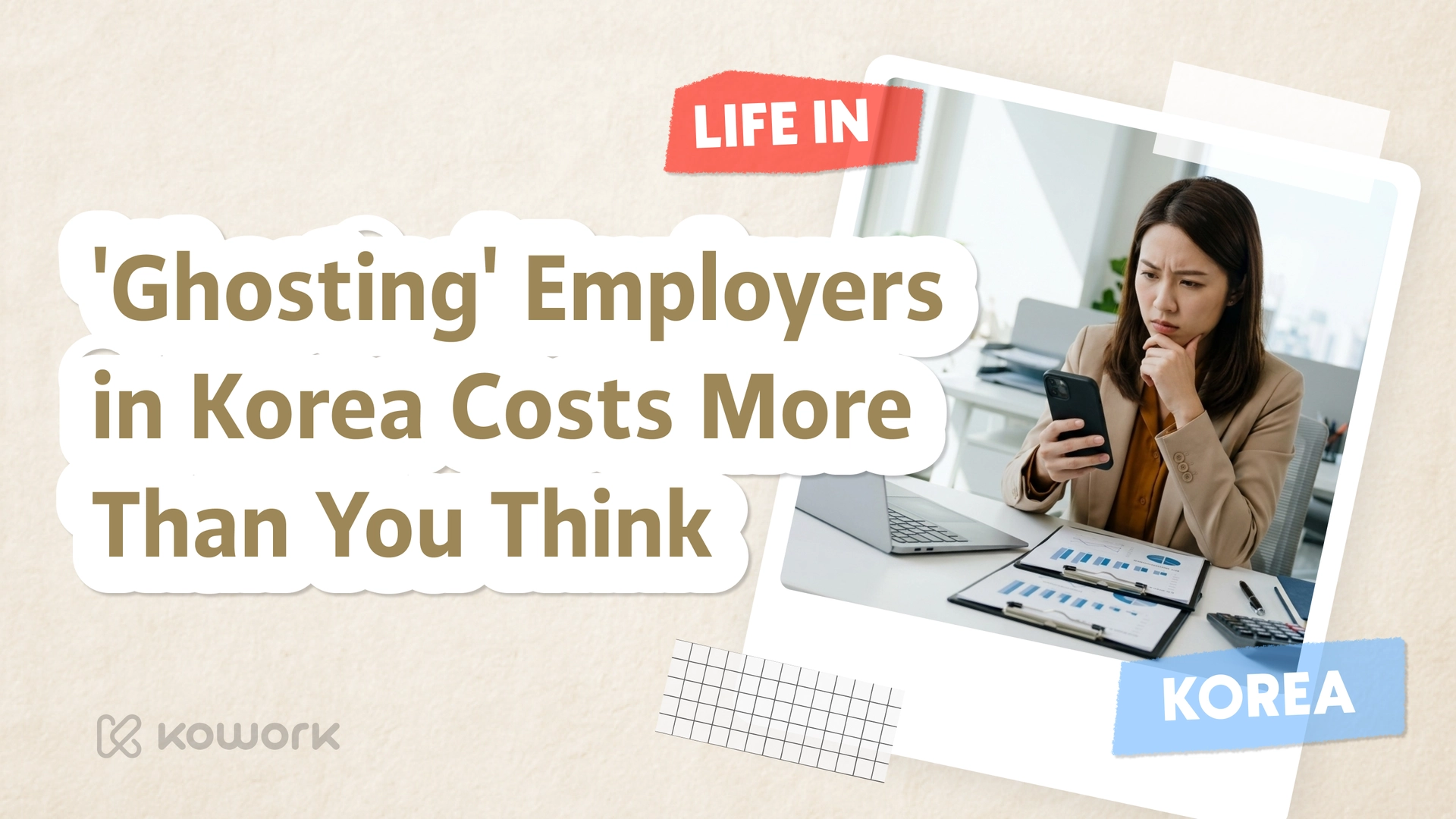
Thinking of Skipping an Interview? Why “Ghosting” Employers Costs More Than You Think
Navigating today’s high-pressure job market as an international candidate is an intense journey. Between tailoring your resume, tracking applications, and preparing for local etiquette, securing an interview invitation in South Korea is a major milestone.
However, recruitment teams across Korea are noticing a growing trend: interview no-shows and last-minute cancellations—often just 10 minutes before the scheduled time (D-10).
Whether it’s due to sudden cold feet, accepting another offer, or an unexpected schedule conflict, ghosting an employer might feel like no big deal in the moment. But in an increasingly connected hiring ecosystem, staying silent can have long-term consequences for your career.
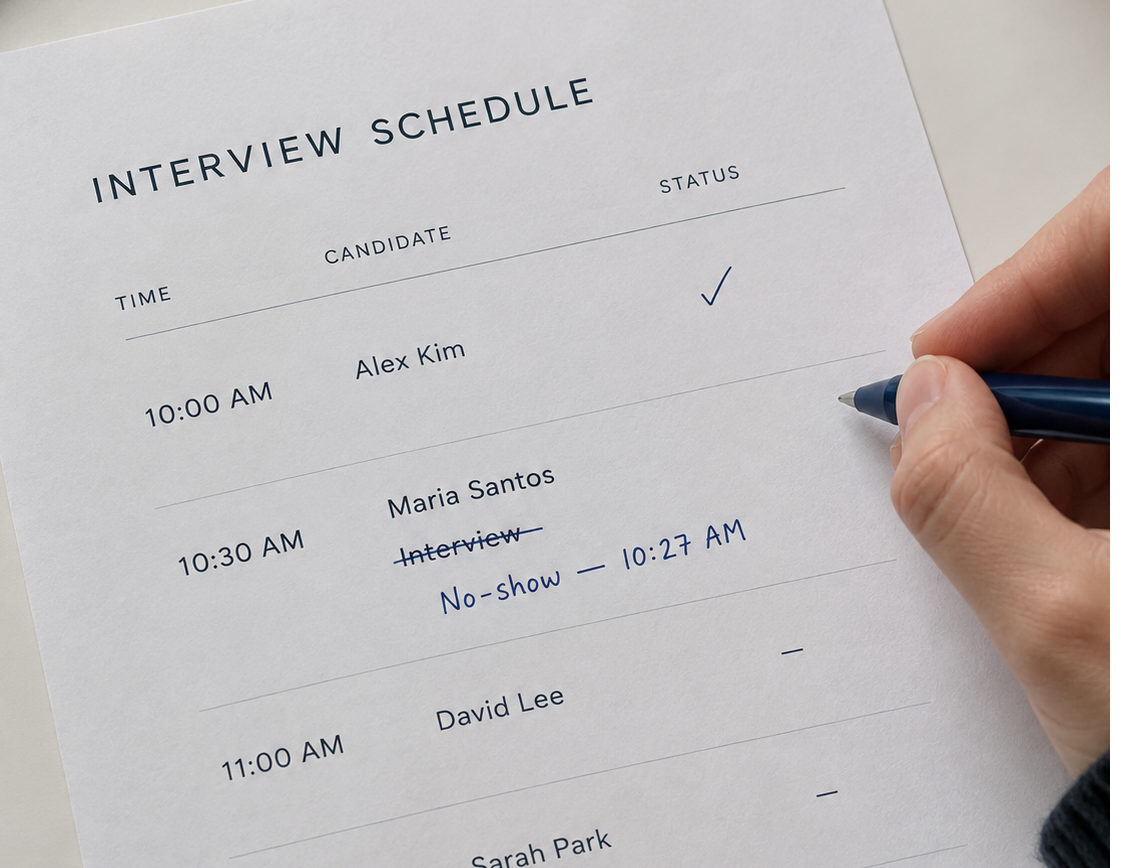
The Reality of Today's Job Market: "If Employers Ghost Us, Why Can’t We?"
Let’s be honest for a second. In today's fast-paced hustle culture and hyper-competitive job market, young job seekers face silent rejection all the time. You send out dozens of applications and often receive zero response. It’s easy to feel like the hiring process is cold and transactional, leading many to think: "Why does it matter if I skip one interview? The company probably won't even notice."
Added to this is the nature of modern job applications. With 1-click apply tools and instant job portals, you can submit your CV to a hundred different postings in a single afternoon, sometimes without deeply checking where the office is located, what the team does, or whether you truly want the role.
It’s easy to feel anonymous. But on the other side of that screen, employers do notice.
When a candidate gets invited to an interview, it means an actual team took the time to review your CV, evaluate your portfolio, and coordinate busy calendars to set aside a dedicated time slot for you.
So, why should you especially avoid no-shows when applying in Korea?
While ghosting is a growing global issue, doing it in South Korea carries unique risks for international applicants. Here is why...
1. The Korean HR Network is Smaller Than You Think
While South Korea boasts a massive global economy, the corporate hiring ecosystem especially for foreigner-friendly, bilingual, or tech-centric roles is surprisingly tight-knit.
- Recruiters and HR professionals network constantly: Talent acquisition managers move between companies, share industry insights, and participate in HR communities. A candidate who ghosted a recruiter at Company A last month might end up on the shortlist for a dream role at Company B next year—only to be recognized by the exact same recruiter.
- Centralized Candidate Tracking Systems (ATS): Modern Korean companies and hiring agencies use Applicant Tracking Systems. When a candidate fails to show up without prior notice, that status is logged permanently as a "No-Show." If you reapply to the same firm or its sister entities down the road, that tag remains on your profile.
2. In Korean Work Culture, Communication Trumps Circumstance
In Korean professional culture, punctuality and clear communication (소통) are foundational pillars of trust.
When a company schedules an interview, hiring panels often include division heads, team leads, and executives who have cleared high-priority blocks in their schedules specifically to meet you.
- Canceling 24–48 hours prior: Respected and understood. Plans change, and recruiters appreciate you giving them time to offer that slot to another applicant.
- Canceling 10 minutes prior or going completely silent: Interpreted as a severe lack of respect for the team's time.
Even if you realize 15 minutes before an interview that you no longer want the job, sending a quick 2-minute message is exponentially better than vanishing.
3. A Polite Decline Can Actually Open Doors
It may sound surprising, but handling an interview withdrawal gracefully can turn a declined opportunity into a valuable professional connection.
Recruiters understand that candidates apply to multiple roles or accept other offers. When an applicant communicates transparently and politely, recruiters view them as a high-integrity professional. It is not uncommon for HR managers to keep polite candidates in mind for future, higher-level roles or refer them within their networks.
Ghosting, on the other hand, burns that bridge permanently.

How to Decline or Reschedule Professionally (Free Templates)
If you need to reschedule or withdraw your application, don't let anxiety hold you back from reaching out. Use these plug-and-play templates to send a prompt, professional message via email or KakaoTalk.
Template 1: Declining an Interview (Accepted Another Offer / Changed Mind)
Subject: Interview Update – [Your Full Name] – [Position Name]
Dear [Recruiter/Hiring Manager Name or Hiring Team],
Thank you very much for inviting me to interview for the [Position Name] role at [Company Name].
I am writing to inform you that I must respectfully withdraw my application as I have [accepted another offer / decided to pursue a different direction for my career at this time].
I truly appreciate the time and consideration your team has extended to me, and I wanted to inform you as early as possible so you can adjust your schedule. I wish [Company Name] all the best in finding the right candidate.
Sincerely,
[Your Name]
[Your Contact Information / LinkedIn Profile]
Template 2: Rescheduling an Interview (Emergency or Scheduling Conflict)
Subject: Request to Reschedule Interview – [Your Full Name] – [Position Name]
Dear [Recruiter/Hiring Manager Name],
Thank you again for scheduling our interview for [Original Date and Time].
Unfortunately, due to an unexpected [urgent conflict / personal matter], I am unable to attend our interview at the scheduled time. I sincerely apologize for any inconvenience this may cause your team.
I remain very interested in the [Position Name] role and would welcome the opportunity to reschedule if possible. I am available on the following dates/times:
- [Option 1: Date, Time & Time Zone]
- [Option 2: Date, Time & Time Zone]
Please let me know if any of these work for you. Thank you for your time and understanding.
Best regards,
[Your Name]
[Your Contact Information]
Template 3: Last-Minute Cancellation (Less than 1 Hour Before)
(If an emergency happens right before the start time, send a quick note immediately rather than disappearing.)
Subject: URGENT: Interview Cancellation – [Your Full Name]
Dear [Recruiter/Hiring Manager Name],
I am deeply sorry for contacting you on such short notice, but due to a sudden emergency, I am unable to attend our interview scheduled for [Time today].
I wanted to notify you immediately out of respect for your time. I sincerely apologize for the inconvenience to you and the interview panel.
Thank you for your understanding.
Sincerely,
[Your Name]

Final Thoughts: Protect Your Professional Reputation
In any global market, your reputation is your most valuable asset. South Korea’s professional ecosystem values responsibility and open dialogue.
Next time you feel hesitant about an upcoming interview, remember: you don't have to attend every interview, but you should close every door with courtesy. Taking 60 seconds to send a cancellation email keeps your reputation intact and your career opportunities open.
Frequently Asked Questions (FAQ)
1. What if I am running late instead of canceling?
If you are running late due to transit or an emergency, notify the recruiter before your interview start time—not after. Send a quick message via KakaoTalk or email stating your estimated arrival time (e.g., "I am currently delayed on the subway and expect to arrive 10 minutes late. I sincerely apologize for the inconvenience."). Korean employers appreciate proactive communication over silence.
2. Is it better to send a message on KakaoTalk, Email, or call?
• More than 24 hours in advance: Email is standard and professional.
• Less than 2 hours or last-minute (D-10): Send a direct message on KakaoTalk or call the recruiter/contact person directly if they previously contacted you that way. Email might not be read in time.
3. What if I’m scared the recruiter will be angry if I cancel?
It is completely normal to feel nervous about withdrawing an application, but recruiters deal with cancellations daily. A polite cancellation email will never anger a professional recruiter, it will actually earn their respect. Staying silent and leaving an entire panel waiting is what causes frustration and burns bridges.
4. I already missed an interview without saying anything. Can I fix it?
Yes! Send an apology email as soon as possible. Acknowledge your mistake clearly: "I sincerely apologize for missing our interview earlier today due to an unexpected emergency/personal situation. I deeply respect your team's time and regret not informing you in advance." While it may not save that specific application, it shows accountability and helps clean up your record in their tracking system.
💼 KOWORK is more than just a job platform, it’s your guide to living in Korea.
Visit our website to read our latest blogs, ask questions in the community tab, and get first-hand advice from experienced expats!
Have questions? Reach out to KOWORK today!