Hello! This is KOWORK, a job platform built for foreigners navigating the job market in Korea.
You've updated your CV. You've applied to ten jobs. Maybe twenty. Maybe fifty. And the only response you've received is... silence.
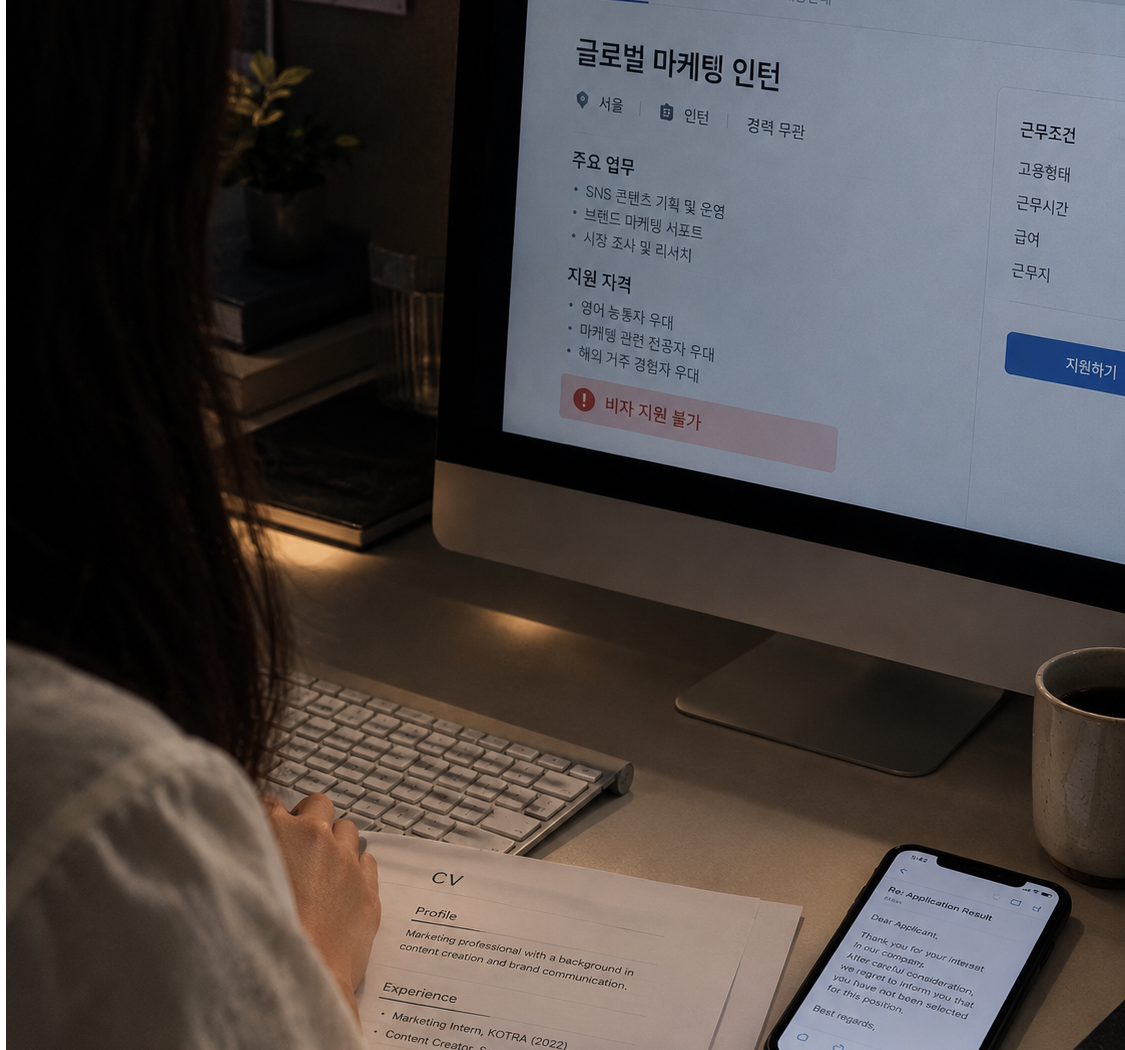
Or worse, a polite rejection email that doesn't tell you anything.
First of all, take a deep breath. It's rarely about your talent. Most of the time, rejections come from small mismatches that are very easy to fix once you know what to look for. And unfortunately, as a foreigner, there are a few extra things to keep in mind.
So in this post, we're breaking down 7 things foreign job seekers often miss when applying for jobs in Korea.
1. Your visa doesn't match the job
Let's start with the big one.
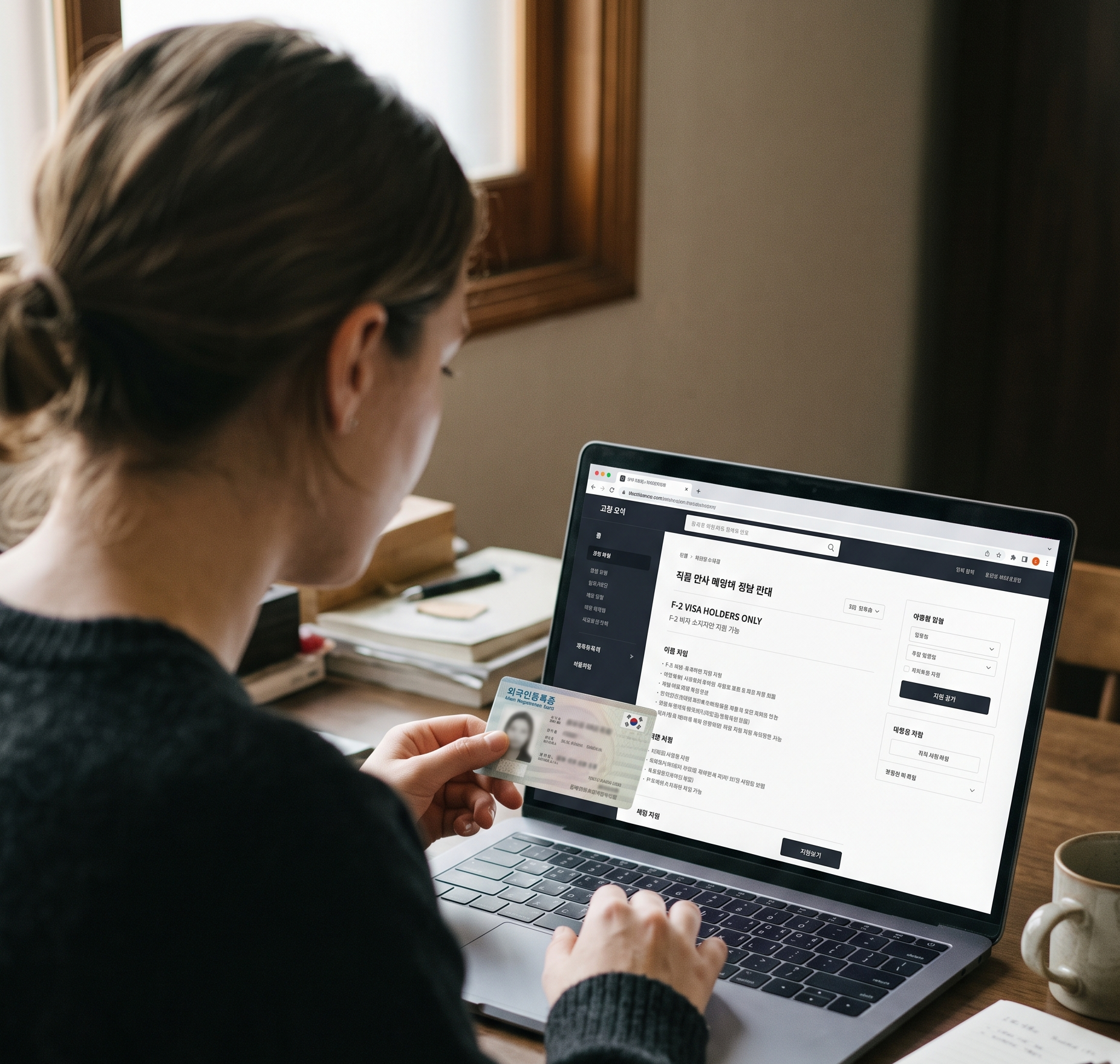
In Korea, your visa decides what work you're legally allowed to do. For many foreign professionals, that means the E-7 visa, which requires a company that is willing to sponsor you for a specific job category.
And not every company can (or wants to) do that. Some have never hired a foreigner and have no idea where to start. Others simply don't want the extra paperwork.
This is also where many people get confused: "English-speaking job" ≠ "foreigner-friendly job."
A posting can be written in English, or ask for English skills, and still be meant for Korean nationals or people who already have the right to work. On the other hand, if you hold a visa like F-2, F-4, F-5, or F-6, you generally have much more freedom in the types of jobs you can take, and employers are often more open to hiring you.
So before you apply, ask yourself:
- Does the posting mention visa sponsorship or "foreigners welcome"?
- Do I know exactly what my current visa allows?
- Does this job fall under a category that can actually be sponsored?
2. Your CV doesn't make your Korean experience obvious
Recruiters in Korea often go through dozens of applications in one sitting. If they can't quickly see why you're a realistic candidate, they will move on to the next one. It's nothing personal, they're just busy.
So make these things easy to spot, ideally near the top:
- 🎓 Education in Korea, if you studied here
- 💼 Work experience in Korea, including internships and part-time jobs
- 🗣️ Korean language level, such as TOPIK level or a clear description like "business-level Korean"
- 🪪 Visa status, for example "Currently holding F-2 visa, no sponsorship required"
Think about what an employer secretly wonders when they see a foreign applicant: Can this person communicate with our team? Can we legally hire them? Will they stay?
Your CV can answer all three questions before they even need to ask.
(Not sure how to structure the rest of your CV? We wrote a full guide on what actually matters on your CV. Go check it out!)
3. You're applying without checking the actual requirements
We get it. When you're stressed about finding a job, it's tempting to apply to everything and hope something sticks.
But Korean job postings are usually very specific, and companies often screen strictly against them. Before you hit submit, check:
- Korean proficiency: Is it 필수 (required), 우대 (preferred), or not mentioned at all? These mean very different things.
- Degree or major: Some roles, and some visa categories, expect a related field.
- Years of experience: If they ask for 3+ years and you have 6 months, it's going to be a long shot.
- Location: Seoul? Busan? A factory town two hours from the nearest subway? Make sure you're actually willing to go there.
Ten well-chosen applications will always beat fifty random ones.
4. Your application doesn't show what you can actually do
Read your CV out loud.
Does it say things like "hardworking," "great communication skills," "passionate team player"?
Great. So does everyone else's.
Recruiters have read those words thousands of times, and they don't tell them anything about you. What does stand out is results.
❌ "Good at marketing"
✅ "Grew Instagram followers from 2,000 to 15,000 in 6 months"
❌ "Experienced in customer service"
✅ "Handled 40+ customer inquiries per day in English and Korean"
Don't have exact numbers? That's okay. Honest estimates work too. Think about scale, time, tools, and outcomes: How many people? How often? What changed because of your work?
Even a part-time job or a university project can sound impressive when you explain it this way.
5. You're applying too late
Timing matters more than most people realize.
Many Korean companies have clear application deadlines, and some still hire in seasonal cycles, with big recruitment pushes at certain times of the year. Rolling hiring (상시채용) is becoming more common, but plenty of companies still work on fixed schedules.
If you apply after the deadline, or after the position has quietly been filled, your application might never even be opened.
A few habits that help:
- Apply within the first few days of a posting whenever you can
- Write down deadlines in a simple tracker (a Notion page or spreadsheet is enough)
- Learn when your target industry usually hires
Sometimes the difference between a rejection and an interview is just a week.
6. You're using the same CV for every job
We say this in almost every CV-related post, and we'll say it again:
Don't apply with the same CV twice.
We know. Tailoring your CV every time is exhausting. But you don't need to rewrite everything from scratch. Just adjust the parts that matter most:
- Your summary or first section: Make it speak directly to this role
- Keywords: Use the same language as the job posting (skills, tools, responsibilities)
- Order of experience: Put the most relevant experience first
For example, if you're applying for a content role, start with your writing and social media work. If it's a sales role, lead with client-facing results.
It takes about 15 extra minutes, and it shows the employer you care about this job, not just any job.
7. You're not following up (or following up too much)
In Korea, silence doesn't always mean "no." But it doesn't always mean "yes" either.
Some companies only contact shortlisted candidates, and many never send rejection emails at all. So how do you follow up without being annoying?
- Wait about 1 to 2 weeks after the deadline or after you applied
- Send one short, polite email. Introduce yourself, mention the position you applied for, and say you're still very interested
- Keep the tone formal and respectful. This isn't the time for casual language
- Respect the posting. If it says "only shortlisted candidates will be contacted" or "no phone calls," follow it
One thoughtful follow-up shows professionalism. Five emails in three days shows... something else.
✅ Before Your Next Application, Check:
☐ Does my visa/status fit the position?
☐ Do I meet the required experience?
☐ Is my Korean level clear?
☐ Does my CV show relevant Korean experience?
☐ Did I tailor it to this position?
☐ Did I clearly show what I can contribute?
If you can tick all six, you're already ahead of most applicants.
Lastly
Job hunting in Korea can feel discouraging, especially as a foreigner. But a rejection is usually feedback about fit, not about your value.
Adjust, learn, and keep going. The right match is out there.
Looking for jobs in Korea? Explore foreigner-friendly opportunities on KOWORK.
And remember, KOWORK is more than just a job platform. It's your guide to living in Korea. Visit our website to read our latest blogs, ask questions in the community tab, and get first-hand advice from experienced expats!
Have questions? Reach out to KOWORK today. 🍀