Hello! This is KOWORK, a job platform built for foreigners navigating the job market in Korea.
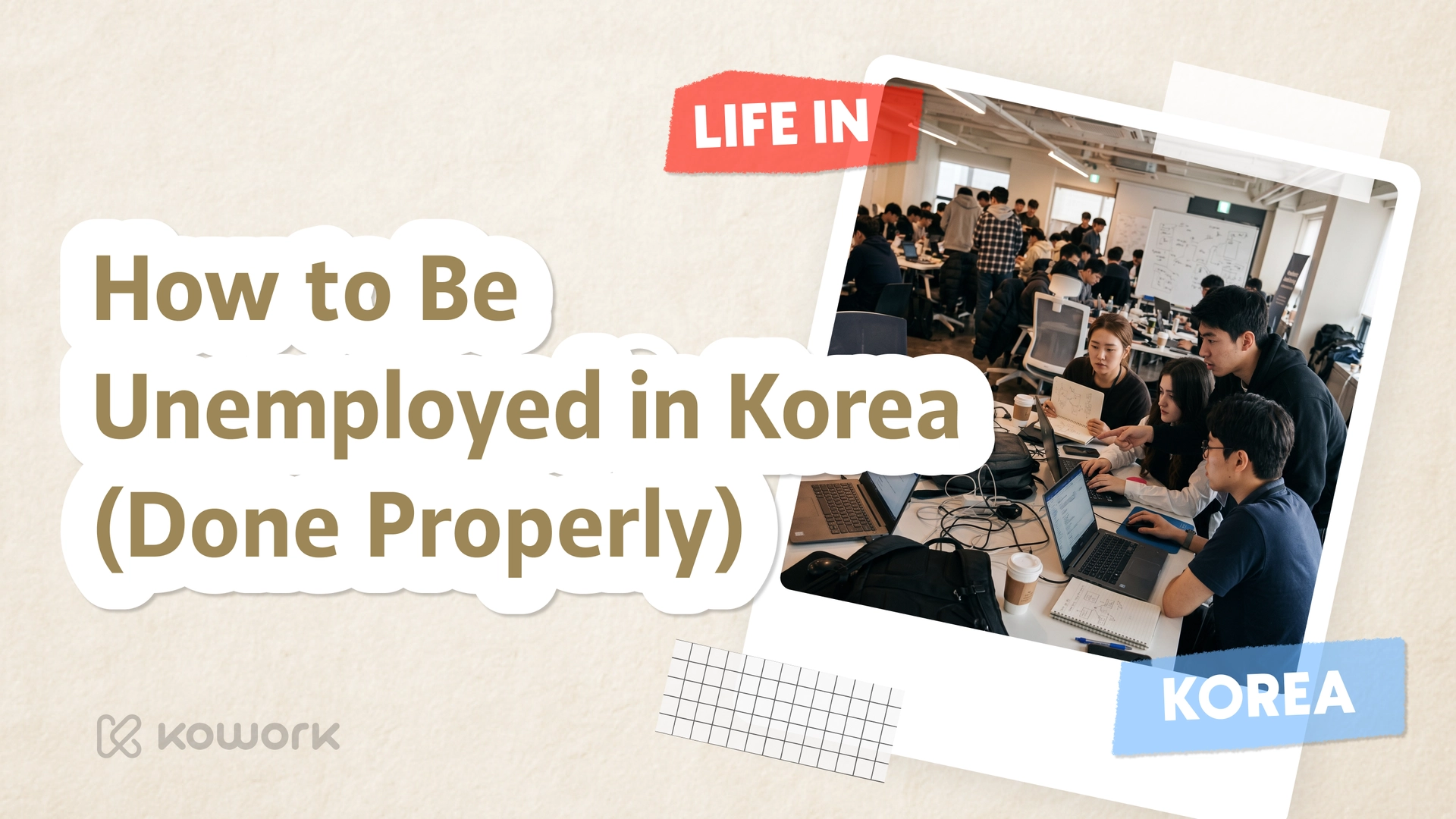
Unemployed in Korea? Don’t Waste It.
You know the feeling. You’re staring at your Alien Registration Card (ARC), watching the expiration date creep closer like the countdown in an action movie. Every day without a job feels like a small personal failure, so you spend eight hours a day firing your resume into the void of online job boards, hoping someone, anyone, will offer visa sponsorship.
Please stop. You’ll burn out long before your visa does.
I get why it’s scary. In Korea, a blank stretch on your resume, the dreaded gongbaekgi (공백기), makes HR screeners nervous. But being between jobs doesn’t mean sitting still. Used well, this stretch can make you look more hireable than someone who grabbed the first dead-end job that came along.
Here’s how to do unemployment in Korea properly, without losing your mind or your legal status.
1. Get the Most Out of Government Programs
If you have free time, this is the best place to spend it. These programs cost little or nothing, and they can be useful when navigating immigration procedures and preparing for employment with local employers.
KIIP (Korea Immigration & Integration Program)
It used to be completely free. It isn’t anymore, but it’s still very affordable. Yes, grammar classes aren’t anyone’s idea of a good time. But finishing KIIP levels can earn you valuable bonus points toward F-2-7 point-based visa applications, depending on the applicable criteria. It may also provide benefits related to Korean-language proficiency requirements for certain E-7 visa applications. Points are points. Take them.
Global Village Centers
Centers in areas like Itaewon and Gangnam offer free TOPIK prep and business Korean classes. You get free instruction, a reason to put on real pants, and proof that you’re actively settling into life here.

2. Collect Visa Points Like Arcade Tickets
Planning to stay long-term? Treat your gap period as a side quest.
Run by the Ministry of Justice and KOTRA, OASIS offers training programs for foreigners preparing to start businesses in Korea. You don’t need to be launching a startup tomorrow. Completing eligible classroom seminars can earn points toward your D-8-4 Tech Startup Visa or D-10-2 Startup Preparation Visa application.
- OASIS-1 (Basic Intellectual Property): Earns 10 points. This is usually a 12-hour course spread over two days, covering patent fundamentals in Korea.
- OASIS-4 (Startup Basic Class): Earns 10 points. This is usually a 20-hour course covering Korean business regulations, taxation, and labor laws.
Check the latest official OASIS guidance for current course schedules, eligibility, and point requirements before applying. It’s a practical way to build your startup knowledge while working toward a relevant visa application.

3. Make Yourself Legible to Korean Employers
A one-page Western resume sent to a Korean team usually goes straight to the rejection pile. Use this time to build credentials that locals recognize.
Write a proper jasoseo (자기소개서)
Korean HR teams love a structured self-introduction: how you grew up and developed, why you want the job, your strengths and weaknesses, and where you see your career going. Write a real one. Ask a Korean friend to polish the language so it sounds natural.
To make your CV and 자기소개서 better, check out the Career Booster
Volunteer where it counts
Don’t volunteer just anywhere. Pick events that give you two things at once: official 1365 volunteer hours, which may count toward visa point criteria depending on the applicable rules, and access to people who make decisions.
- Cultural festivals: Events like the Lotus Lantern Festival for Buddha’s Birthday need volunteers. You get official hours, free food, and a chance to help run large-scale logistics alongside local teams.
- Film and arts festivals: BIFF, JIFF, BIFAN and others recruit staff and translators. You’ll work shoulder to shoulder with directors, media reps, and event managers.
- Find openings on 1365: Register at 1365 the official government volunteer portal. You can filter by region, category, and dates, and every hour you log is officially verified.
Crash a hackathon
Stop sitting at home refreshing LinkedIn. Join hackathons and regional competitions like the WFUNA Hackathon or local tech and AI events.
- The expat advantage: Many of these events cover travel, meals, and lodging in places like Jeju, Busan, or Gangwon. You get a free weekend away, a portfolio piece built in 48 hours, and direct access to founders, sponsors, and judges who are actively looking for people who can solve problems.
- Where to look: Check upcoming competition listings and recruitment posts for international teammates on foreign recruitment and community platforms, as well as global hackathon channels.
4. Network actively and unconventional ways
Job portals aren’t the only way to get noticed. Go where people in your field actually gather. Instead of relying on a single resume, let people get to know who you are through real conversations and shared activities.
Join a business English club
Korean managers, startup founders, and team leads often join business English discussion clubs to keep their skills sharp. If you are fluent or native-level in English, you can be someone who brings real value to the conversation. Rather than coming across as an applicant asking for a favor, show up as a peer sharing your experience and skills. Over time, people will naturally see how you think and work—and that is how genuine trust begins.
Join a hobby or fitness group
Gyms, running clubs, and hobby groups in startup hubs like Pangyo, Gangnam, or Seongsu are great ways to meet working professionals outside of a formal work setting. You don't need a grand agenda. Simply showing up consistently and being friendly is enough to build meaningful connections naturally over time.

Become a regular at founder-heavy cafes
Take your laptop out of your bedroom and head to cafes in startup hubs like Gangnam or Seongsu. In Korea’s international business scene, simply being a familiar face goes a long way toward building relationships. By visiting the same spots consistently and interacting naturally with people, you can create new connections over time.
⚠️ One thing to avoid at all costs
While you’re out there hustling, be very cautious about accepting an “unpaid internship.” Depending on the nature of the work and the arrangement, an unpaid internship may violate Korean labor laws. Working without appropriate compensation or authorization under your visa status may also create problems for your future immigration applications, including an E-7 application. Before accepting an offer, make sure you understand the employment conditions and whether the arrangement is permitted under Korean labor and immigration rules.
(I’m writing a separate post on why unpaid internships in Korea can be such a trap. Stay tuned.)
The Bottom Line
Unemployment in Korea isn’t a countdown to defeat; it’s a preparation phase for your next step. Use this time to learn, contribute, and actively engage with the communities around you. Join government programs, volunteer, build something with a team, and connect with people who share your interests. You won’t just fill a gap on your resume—you’ll become someone people genuinely want to work with, and that is what opens doors.
When an interviewer asks what you did during your gap period, you won’t have to settle for saying, "I was just applying for jobs." Instead, you’ll have real stories to tell about what you learned, who you collaborated with, and what you contributed.
💼 KOWORK is more than just a job platform, it’s your guide to living in Korea.
Visit our website to read our latest blogs, ask questions in the community tab, and get first-hand advice from experienced expats!
Have questions? Reach out to KOWORK today!