Hello! This is KOWORK, a job platform for foreigners in Korea.
In Part 1, we introduced six more essential terms you'll commonly encounter in Korean job postings, from salary (연봉) to severance pay (퇴직금).
But understanding a job offer is only the first step. Once you receive your employment contract (근로계약서), you'll come across more terms that explain your salary breakdown, deductions, paid holidays, and contract notice rules.
Here are five more Korean workplace terms to help you understand what you're signing.

Schedule & Salary Terms
1. 수당 (Allowances) — 식대, 교통비, 연장·야간·휴일근로수당
수당 refers to additional payments listed in your salary breakdown. Common examples include:
- 식대 & 교통비 (Meal & transportation allowances):
Monthly allowances for meals (commonly around ₩100,000–₩200,000) or commuting. In many contracts, 식대 is treated as a tax-free portion of your agreed annual salary (up to ₩200,000 per month) rather than extra cash on top, which helps increase your take-home pay - 연장·야간·휴일근로수당 (Overtime, night & holiday pay):
Under Korean labor rules, working between 10:00 PM and 6:00 AM, beyond standard hours, or on holidays is generally subject to an additional premium of at least 50% of ordinary wages. This premium applies to workplaces with 5 or more employees. - 포괄임금제 (Inclusive wage system):
A common pay structure where a fixed number of overtime hours is already built into your monthly salary. If your contract includes this term, check how many overtime hours are covered and how additional hours are handled.
2. 공제 항목 (Deductions)
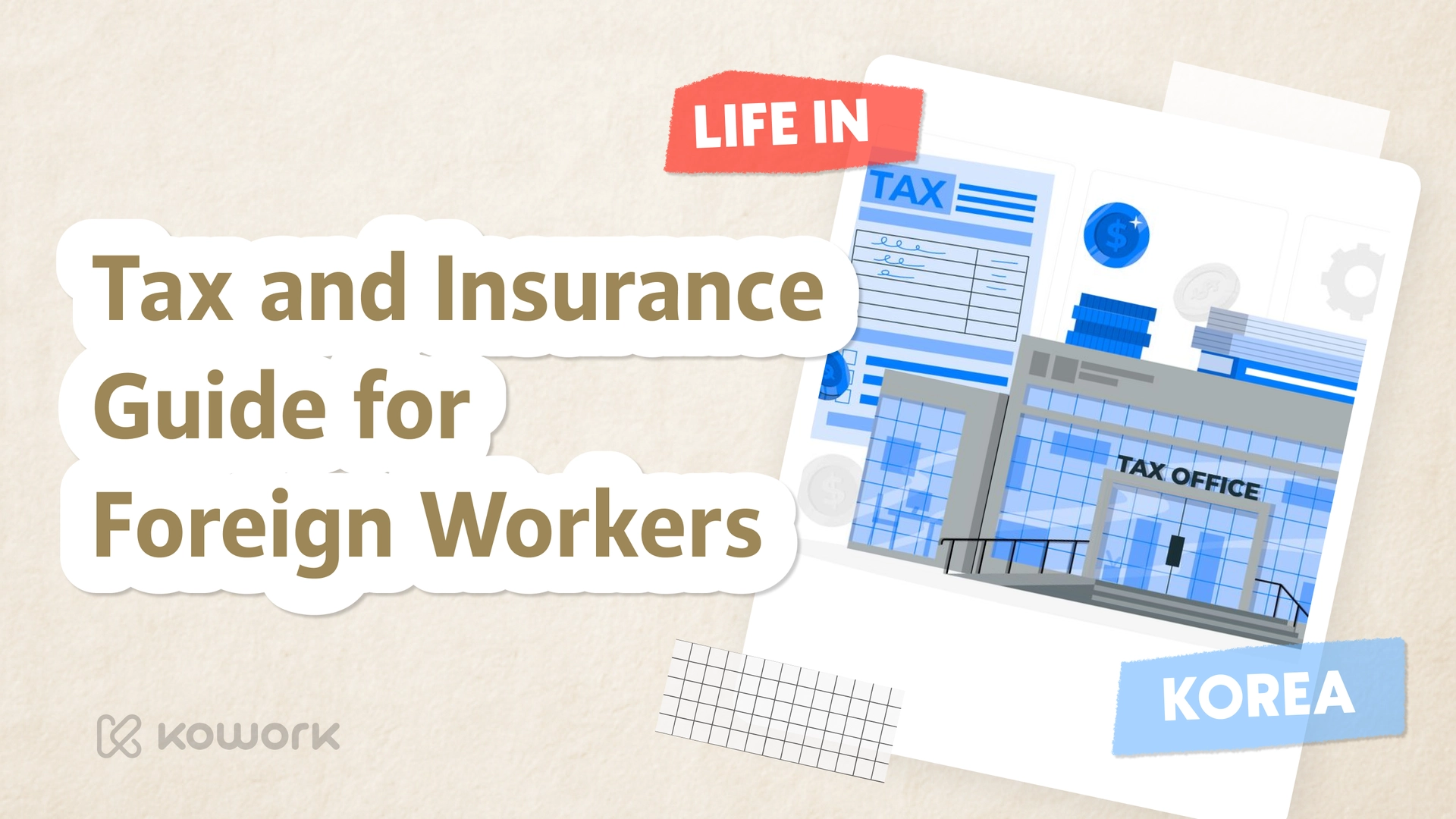
공제 항목 are the amounts automatically subtracted from your monthly pay before it reaches your bank account. On a Korean payslip (급여명세서), this mainly includes your share of the 4 major insurances (4대보험)—Health Insurance, National Pension, Employment Insurance, —plus income tax (소득세) and local income tax (지방소득세).
→ Please note that insurance eligibility and contribution requirements may differ for foreign employees depending on their nationality, visa status, and applicable social security agreements. Check which insurances apply to your individual situation.
3. 급여일 (Payday)
급여일 is the day your salary is deposited into your bank account each month. Common payday dates in Korea include the 10th, 25th, or the last day of the month. Check your contract for the exact date and whether payment moves to the prior business day if payday falls on a weekend or public holiday.
Working Conditions & Leave
4. 근무시간 & 휴게시간 (Working Hours & Break Time)
Most Korean offices follow a 9:00 AM to 6:00 PM schedule. Although this looks like a nine-hour workday, it includes a one-hour lunch break (휴게시간), which is generally excluded from working hours. This means you work eight hours in total, excluding your break.

5. 연차 / 유급휴가 (Annual Leave)
연차 (or 연차유급휴가) refers to your annual paid leave entitlement. Under 1 year: You earn 1 paid day off for each full month of attendance, up to 11 days. After 1 year: Once you complete one full year and meet the attendance requirement, you receive 15 days of annual paid leave in workplaces with 5 or more employees.
- 유급 휴가 vs. 무급 휴가 (Paid vs. Unpaid):
유급 means you receive your regular wages during time off (like 연차), while 무급 means unpaid (such as certain personal leave, depending on company policy).

A Quick Tip for Your First Week
Every company has its own internal guidelines or company policies covering day-to-day details . During onboarding, simply ask HR or your manager where you can find these internal guides, checking them early will help you settle into your new workplace much more smoothly.
Please note: This article provides general information and does not constitute legal advice. Labor regulations and tax rules may vary depending on your circumstances and can change over time. For guidance specific to your situation, consult the Korean Ministry of Employment and Labor (1350) or a licensed labor attorney (공인노무사).
KOWORK is more than just a job platform. It's your guide to working and living in Korea.
Visit our website to explore our latest blog articles, ask questions in our community, and learn from the experiences of other foreigners living and working in Korea.
Have questions? Reach out to KOWORK. We're here to help!