Hello! This is KOWORK, your go-to job platform for foreigners navigating the Korean career landscape.
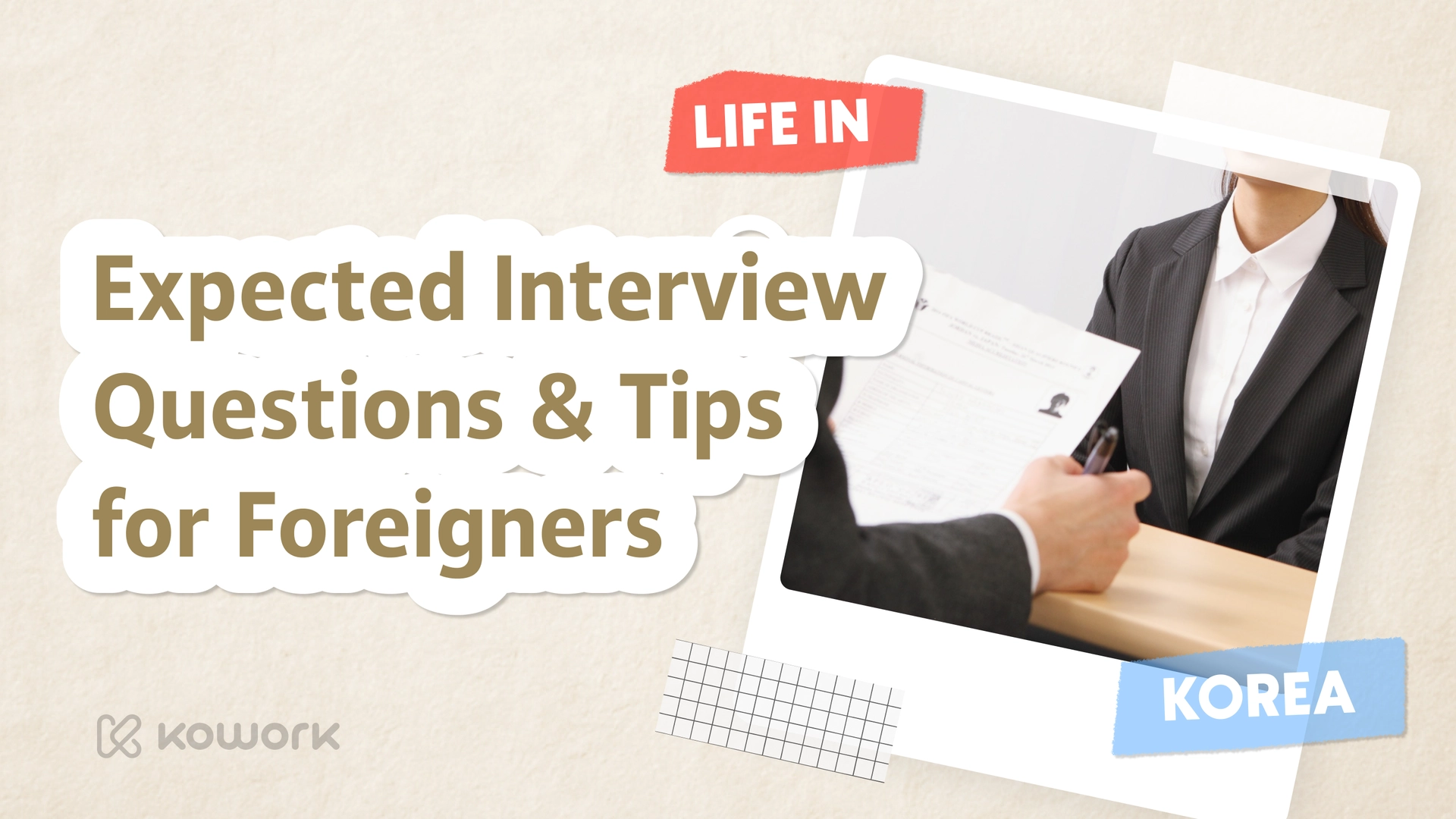
As a hiring platform, one of the most frequent questions we receive is: “How do I ace my interview in Korea?”
We’ve already covered general tips to help you shine in interviews read them here. However, we know that foreign candidates often feel an extra layer of anxiety just thinking about the process.
- What will they ask?
- What if I don't understand the questions?
- Will it be in Korean or English?
- What on earth should I wear?!
It is completely normal to feel stressed! Every country has its own workplace culture and unwritten rules. But at the end of the day, remember the core objective: they just want to get to know you.
In this post, we’ll walk you through how traditional job interviews in South Korea work—and how you can prepare to put your best foot forward.
1. What Should You Wear?
As in most places, formal business attire is the standard here.
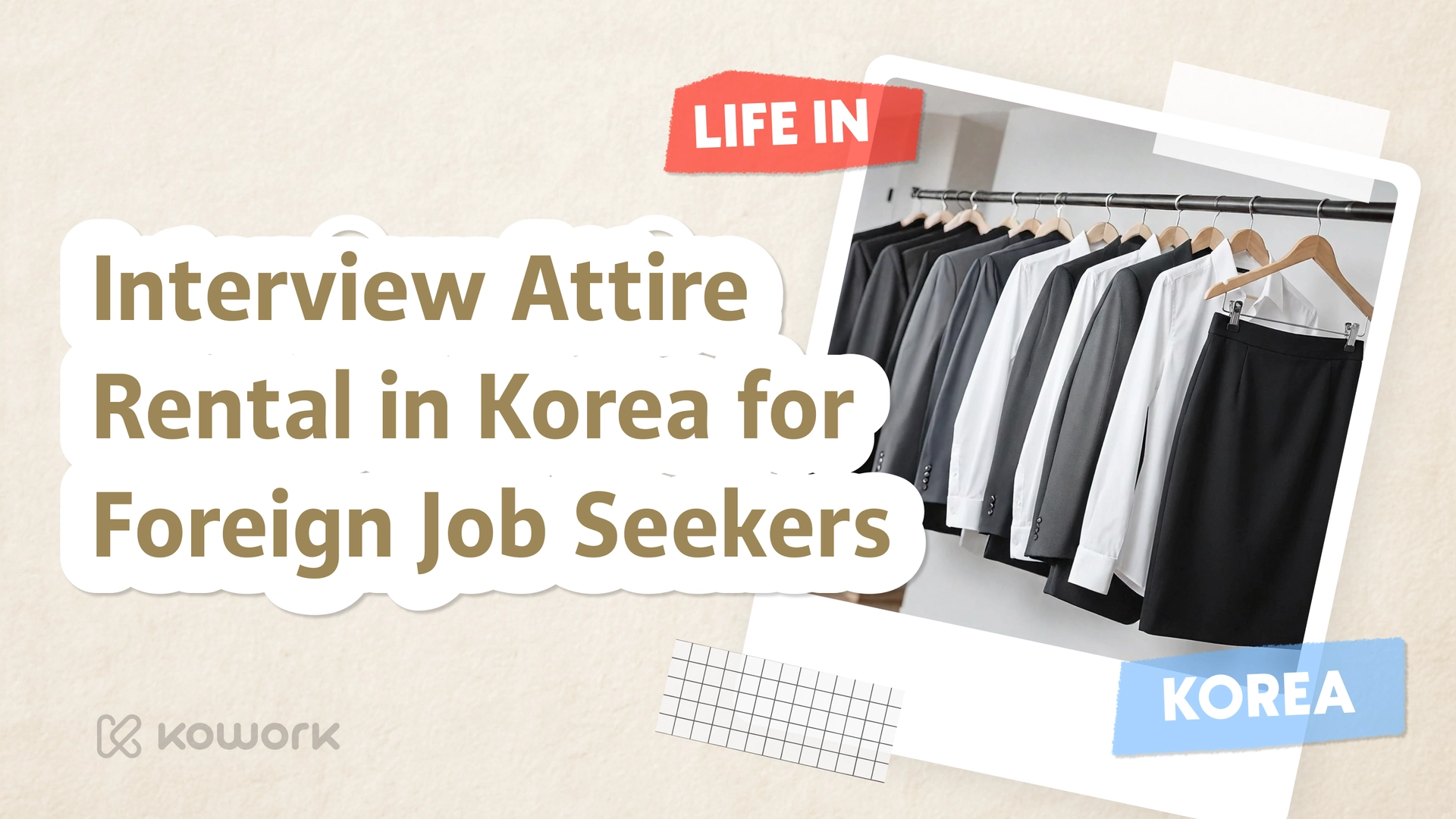
- The Suit: Opt for a tailored business suit in conservative colors like navy or black, paired with a neat collared shirt or blouse.
- Grooming: Hair should be neat and presentable—either tied back neatly or styled away from your face.
Don’t own a suit? No problem at all!
Local city governments in Korea offer suit rental services. For example, if you live in Seoul, are under 39 years old, and have an upcoming job interview, you can rent a full suit (and even shoes) completely free of charge. Check out the service details here!
2. When Should You Arrive?
Whatever you do, do not be late.
Punctuality is a major indicator of reliability in Korean work culture. For large companies hosting group interviews, schedule changes are almost impossible, being late is essentially an automatic rejection.
- The Sweet Spot: Aim to arrive at the waiting area 15 to 20 minutes before your scheduled time.
- Pro-tip: Don't go inside the office too early (e.g., an hour ahead), as this can disrupt the HR team’s schedule. Wait at a nearby cafe until it's about 20 minutes before your slot.
3. Mastering the First Impression
First impressions carry immense weight in Korea. Here is the step-by-step etiquette for entering the room:
- The Entrance: Knock twice on the door before opening it. Step in with a warm, confident smile.
Greeting: Greet the interviewers politely, bowing at a 45-degree angle with your hands placed neatly in front of you. Wait until they invite you to sit before taking your seat.
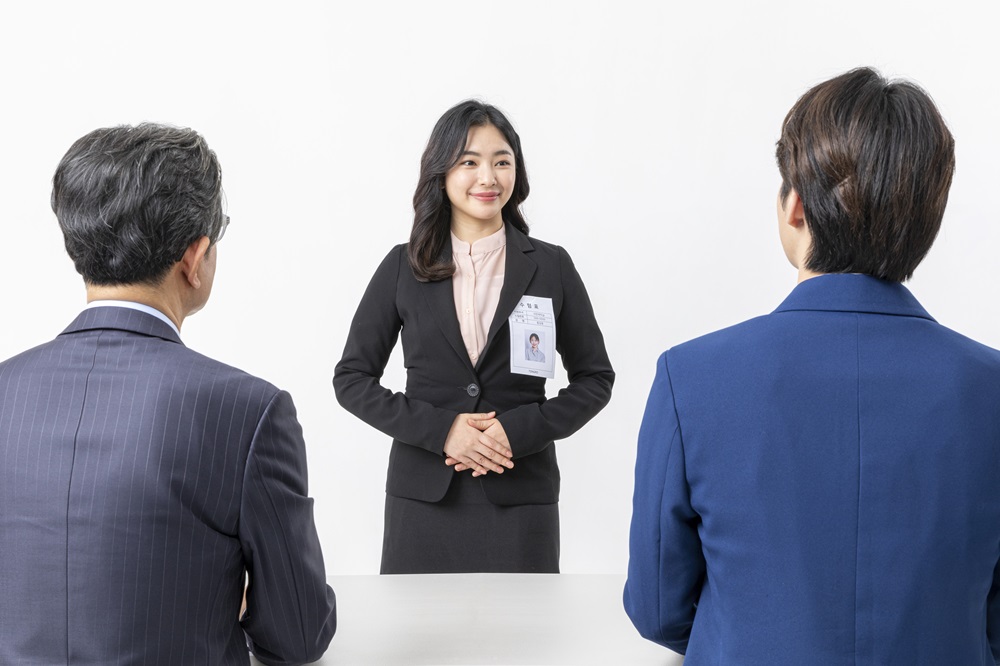
- Active Listening: If HR or the interview panel begins by introducing themselves, listen attentively, maintain respectful eye contact, and nod occasionally to show engagement.
- The Self-Introduction (1–2 minutes): Most interviews begin with a request for a brief self-introduction. Focus on your relevant skills, past work experience, and how you can add value to the team.
- Speak at a steady, natural pace.
- If interviewing in Korean, use formal, respectful language endings (e.g., ㅂ니다 / -습니다).
End your introduction warmly with a simple: "Thank you for this opportunity."

4. Posture and Body Language
If you’ve watched K-dramas, you might already be familiar with standard Korean business etiquette! First impressions are visual, and posture conveys respect.
- Sitting Position: Sit up straight with your shoulders back—no slouching or leaning against the backrest.
- Hand Placement: Women usually rest their hands neatly together on their lap. Men typically place rested, light fists on their thighs.
- Gestures: While natural hand gestures are fine, try to keep them minimal and controlled.

5. Essential Interview Manners
- Silence Your Phone: Turn off ringers and vibrations before entering the building. A buzzing phone in a quiet room is an immediate distraction.
- No Gum or Snacks: Dispose of any gum or mints long before you are called into the room.
6. What If You Don’t Understand a Question?
It is completely normal not to grasp every single word, especially if the interview is conducted in Korean. Don't panic!
- If you missed a word: Smile politely and say:
"I’m sorry, could you please repeat the question? I didn't catch it clearly."
(In Korean: 죄송하지만, 다시 한 번 말씀해 주시겠습니까?)
- If you don't know the technical answer: Be honest rather than guessing or making something up. You can say:
- "I am not fully familiar with that specific area yet, but it is something I plan to study and master right away."
7. Handling Visa & Sponsorship Conversations
This is one of the most critical topics for foreign candidates, yet it’s rarely discussed openly. Handling it with tact can make all the difference.
- When to raise it: Do not bring up visa details in the first 5 minutes. Wait until the end of the interview when the employer asks, "Do you have any questions for us?" or when they ask about your current status in Korea.
- How to phrase it politely: Focus on clarity and ease for the employer. Frame it as a mutual logistics check rather than a burden on them.
- Good Phrasing: "I currently hold an [X] Visa, which allows me to work under [X conditions]. Should we decide to move forward, I have reviewed the requirements for transitioning to an [E-7/appropriate] visa, and I can handle most of the paperwork myself to make the process as smooth as possible for you."
- Reading the response:
- Encouraging Response: "We’ve sponsored visas before, or we're open to providing the company documentation you need." (Shows openness).
- Cautionary Response: "We don't support visas at all." or hesitation due to lack of experience. (Be prepared to explain how simple the process can be if you have accurate guidance from KOWORK!).
8. Crucial Mistakes to Avoid
These are the common pitfalls candidates make and the ones interviewers remember most:
- Zero Time Buffer: Showing up right on the dot or running late due to subway delays.
- Being Overly Casual: Treating the panel like friends rather than maintaining professional boundaries.
- Arrogance Over Confidence: Overselling achievements without giving credit to teamwork, or failing to show a willingness to learn local work dynamics.
- Speaking Ill of Past Employers: Criticizing your former boss or company instantly signals red flags regarding your attitude.
- Lack of Company Research: Not knowing what the company actually does, its major products, or recent news.
- Ignoring the Visa Topic Until the Offer Stage: Surprising an employer with complex sponsorship needs after they offer you the job can destroy trust.
- Fixating on Salary Too Early: Bringing up pay, vacation days, or benefits before establishing your value to the company.
- Mismanaging Group Dynamics: Sitting completely silent in a group setting, or interrupting and dominating other candidates.
9. Common Korean Interview Questions to Prepare For
Be ready to address standard questions alongside culture-specific ones:
- "Please introduce yourself briefly."
- 간단하게 자기소개 부탁드립니다.
- "Why do you want to work at our company specifically?"
- 특별히 저희 회사에 지원하신 이유는 무엇인가요?
- "How are you adjusting to living in South Korea?"
- 한국에서의 생활에는 어떻게 적응하고 계신가요?
- "What are your key strengths and weaknesses?"
- 본인의 가장 큰 장점과 단점은 무엇인가요?
- "What are your career goals over the next 3 to 5 years?"
- 향후 3~5년 내의 커리어 목표는 무엇인가요?
Note on Personal Questions:
In Korea, especially in smaller or medium-sized businesses interviewers may ask personal questions about your age, marital status, or family background. While large corporations usually avoid this, smaller companies see it as standard small talk.
If a question feels uncomfortable or too intrusive, answer gracefully without sounding defensive. You can give a light smile and keep it brief:
"I'm currently fully focused on developing my career here in Korea!"
10. Wrapping Up
When the interview concludes, thank the interviewers warmly for their time and give a polite bow.
Etiquette tip: Do not offer a handshake unless the interviewer extends their hand first.
Navigating the job market in a new country isn't easy, but with the right preparation and cultural awareness, you can walk into any interview room with confidence!
Ready to Find Your Next Role in Korea?
Explore the latest foreign-friendly job openings, visa guides, and career resources tailored just for you on KOWORK.
👉 Browse Open Positions on KOWORK Today
💼 KOWORK is more than just a job platform, it’s your guide to living in Korea.
👉 Join Our Community & Never Miss an Update